How to Cook Sweet Potatoes: Whole, Roasted, Mashed and Stuffed
Choose whole baking, roasting, microwaving or mash, then learn cutting, toppings, tenderness checks and practical troubleshooting.
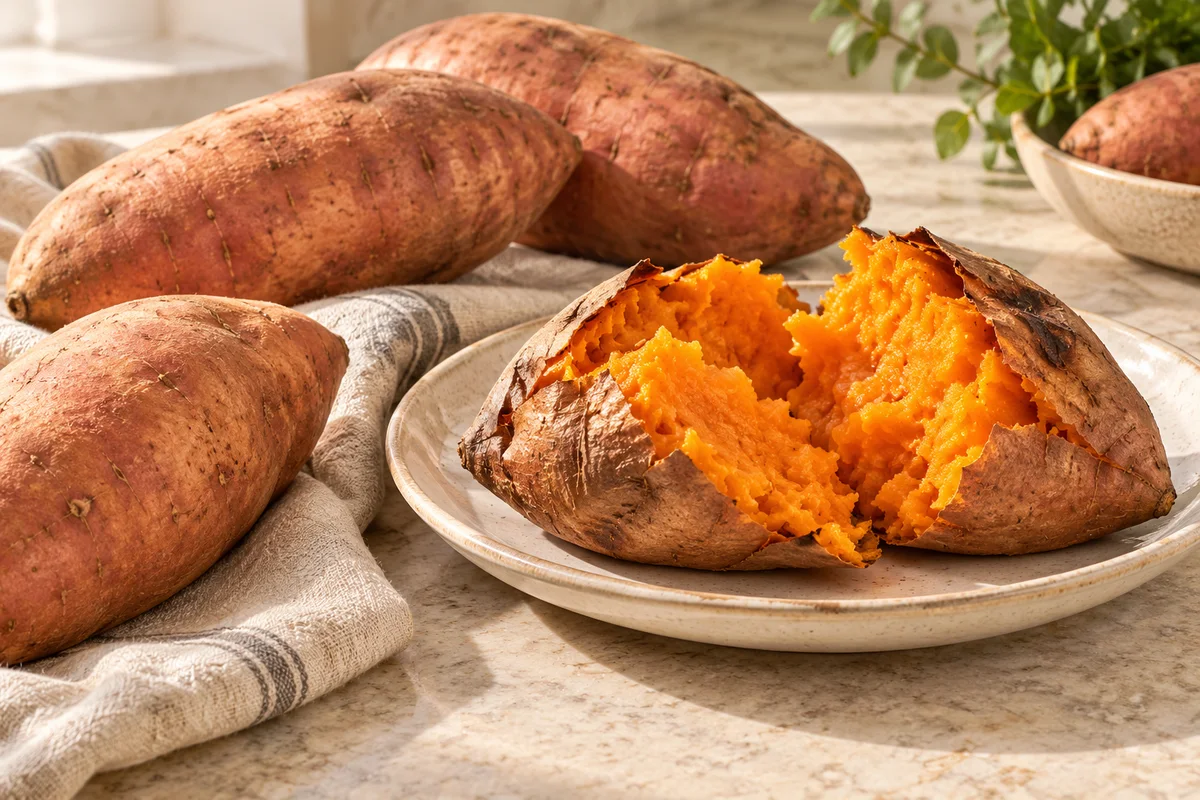
Sweet potatoes can become a soft center for a stuffed dinner, roasted pieces for a bowl, or a smooth mash alongside vegetables and protein. The ingredient is flexible, but those results depend on different cuts and methods. A whole sweet potato cannot be timed like a small cube, and a soft orange variety may not behave exactly like a firmer pale one. Choosing the form before turning on the oven makes the rest of the meal easier to plan.
This guide explains buying, preparation, method selection, flavor, and practical troubleshooting. It complements the site's black bean and corn stuffed sweet potatoes rather than creating another copy of that recipe. Suggestions avoid pork and alcoholic cooking ingredients. Cooking times vary with size, variety, and equipment, so tenderness is the final check. The images are realistic 3D illustrations, not photographs of a documented cooking test, and no nutrition figures have been estimated here.
Recognize the variety and the texture you want
Sweet potatoes come with different skin and flesh colors, and the supermarket name does not always tell you everything about texture. Orange-fleshed products are familiar for soft baked centers, while other varieties can feel different when cooked. Look at the label and buy consistently if you want a repeatable result. If a recipe specifies a variety, use that information rather than assuming every root with a similar outline is equivalent.
Some shops use the word yam loosely on signs, while true yams are a different ingredient. For cooking, identify what you actually bought rather than relying on an informal display name. A photo can help with recognition but cannot replace the product information. If you are uncertain, ask the retailer. Correct identification is more useful than trying to compensate later for a root that does not soften as your chosen recipe expects.
Buy similar sizes when cooking them together
For whole baking, a group of similarly sized sweet potatoes is easier to manage than one enormous root surrounded by several small ones. Diameter matters as well as length, because a thick center takes time to become tender. Choose firm roots without significant soft areas, mold, or damage that raises a spoilage concern. A dramatic shape may be attractive, but a fairly even one can be easier to prepare and portion.
Buy for the meal rather than choosing size only by price. A large stuffed sweet potato can become a substantial plate, while smaller roots may suit an accompaniment. If your household prefers different portions, plan how you will serve them instead of expecting one fixed cooking time for all sizes. You can remove smaller roots when ready and continue cooking larger ones, provided you handle and hold the food appropriately.
Store raw sweet potatoes in suitable conditions
Follow the retailer's or package's advice for raw storage. Sweet potatoes generally prefer a cool, dry, dark place rather than damp conditions, and handling that causes bruising can shorten their useful life. Buy a manageable amount if your home does not offer ideal storage. A large discounted bag is not economical if many roots deteriorate before you use them. Check stored produce regularly instead of forgetting it at the back of a cupboard.
Keep raw roots separate from cooked portions and label any prepared containers clearly. Washing everything far in advance can introduce moisture you do not need during storage, so prepare according to a safe method for the form you intend to keep. Do not try to solve spoilage with a longer cooking time. If a root is compromised in a way that raises concern, discard it rather than hiding the problem in mash or sauce.
Wash and decide whether to peel
Scrub sweet potatoes under running water and remove surface dirt before cutting or cooking. Use clean equipment and a stable board. Whether you leave the skin on depends on the method and your preferences, but washing still matters if you will peel it. A knife moves from the surface into the flesh, so an unwashed exterior is not irrelevant simply because it will later be discarded.
For a whole stuffed preparation, keeping the skin helps provide structure around the soft center. For a smooth mash, peeling may give the texture you prefer. Roasted cubes can work with or without skin when the recipe allows. Make the decision before cutting, and use a suitable peeler or knife rather than forcing an awkward tool. A consistent preparation gives you more useful texture information than changing the peel, cut, and cooking method together.
Cut safely and keep pieces comparable
A firm raw sweet potato can be awkward to cut. Use a stable surface, a suitable sharp knife, and a shape that sits securely rather than rolls. Create a flat side when appropriate for the method, and keep your fingers clear. Do not use force beyond what you can control. If a root is particularly difficult to cut, a whole-cooking method may be a better choice for that meal and your equipment.
For roasting, aim for pieces of comparable thickness. They do not need to be geometric, but a mixture of thin scraps and large chunks will not finish together. The same principle applies to wedges: their thickest part determines much of the cooking time. Save small usable pieces for a method where the difference is manageable instead of scattering them onto a tray where they may burn before the larger pieces soften.
Bake whole for a tender center
Whole baking is useful for a stuffed dinner because it preserves a shell around a soft interior. Wash the root, follow a reliable method for piercing and any surface oil, and place it on an appropriate tray. Sweet potatoes can release sticky juices, so use a tray and lining suitable for the oven and your appliance instructions. Avoid assuming the skin will contain every drop throughout cooking.
A commonly used oven range is around 400°F or 200°C, but follow the complete recipe and adjust your expectations for size. Test the thickest part carefully for tenderness rather than judging only the skin. A root that feels soft at the narrow tip may remain firm in the center. When ready, handle it with protection from heat and steam. Split and finish according to the recipe rather than leaving the whole batch at room temperature while preparing an elaborate topping.
Use the microwave when the schedule needs it
Microwaving can be a practical option for a tender sweet potato when you do not need the same exterior as oven baking. Follow your appliance directions, use a microwave-safe dish, and pierce the root as the method requires. Size and microwave power affect the time, so start with a suitable method and check in stages. A large root needs more attention to even cooking than a small one.
Turn or redistribute as directed and allow a safe standing period before testing the center. Escaping steam can be hot, especially when you split the root. Do not expect microwaving alone to produce exactly the same skin texture as a dry oven method. Choose it because its result fits the meal. For a stuffed preparation, the tender center may matter more to you than a crisp exterior, and that is a reasonable practical decision.
Roast cubes for browned edges
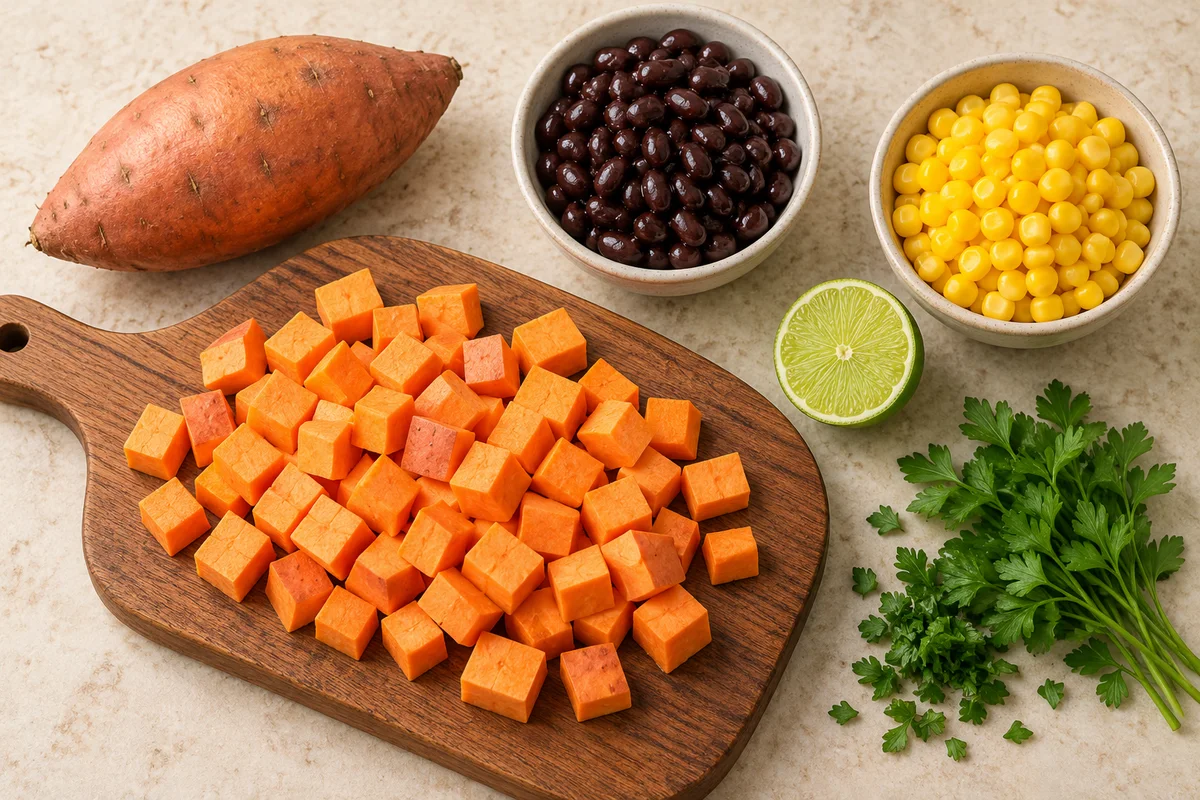
Roasted pieces offer a different balance of surface and center from a whole root. Toss evenly sized pieces with a measured amount of suitable oil and the seasonings in your chosen recipe. Spread them so they have space rather than creating a deep pile. Moisture trapped among crowded pieces can prevent the exterior you were aiming for, even when the oven temperature is appropriate.
Follow the recipe's oven setting and begin checking before the end of its time range. Turn when directed and assess both browning and tenderness. A dark spice coating can make the surface look finished before the center is ready. Remove pieces that are done if the batch is uneven, and note the cut size for next time. The most useful correction is often a more consistent cut or another tray, not simply a hotter oven.
Wedges and fries need realistic expectations
Sweet potato wedges and thin fries expose different amounts of surface and need methods written for those cuts. A thick wedge should not be judged against a thin crisp fry. Oil amount, surface moisture, coating, tray space, and equipment all influence the result. Choose a recipe that describes the texture honestly rather than expecting every oven preparation to resemble a deep-fried product.
Keep the cuts consistent and avoid piling them up for convenience. If you use an air fryer, follow its capacity and safety instructions and choose a method suited to that appliance. A crowded basket changes airflow and cooking. Test one piece safely before declaring the batch done based on color. For your next attempt, change one relevant factor so you can learn whether size, spacing, or timing made the difference.
Boil or steam when the goal is mash
For a mash, cooking cut pieces in water or steam can be convenient. Peel and cut according to the method, keep pieces reasonably even, and cook until they are suitable for mashing. Drain well if you used water. Excess free liquid becomes part of the mash unless you remove it, so do not immediately add a large quantity of milk or broth before seeing the texture of the cooked pieces.
Mash gently to the consistency you like, adding suitable liquid or fat gradually. A smoother purée and a rough mash are different valid goals. If you use dairy, remember that it changes the ingredient list and allergen description. A vegetable broth or water can serve another direction, but check its flavor and dietary suitability. Season after the texture is established so dilution does not undo your first adjustment.
Build savory flavor without overwhelming sweetness
Sweet potatoes already bring a sweet note, so a savory meal often benefits from contrast rather than another sweet coating. Cumin, paprika, garlic, lemon, and herbs can each create a different direction. Choose a few that support the rest of dinner. A heavily sweetened glaze may suit a particular recipe, but it is not necessary to make the ingredient appealing in a bean bowl or stuffed main.
Taste a small portion with the planned topping before seasoning every component strongly. Black beans, corn, cheese, and prepared sauces can contribute their own salt and intensity. Lemon juice adds acidity rather than the same effect as salt, and a drizzle of oil adds richness rather than solving an undercooked center. Identify the actual need. A structural cooking problem and a flavor balance problem require different corrections.
Choose toppings with distinct jobs
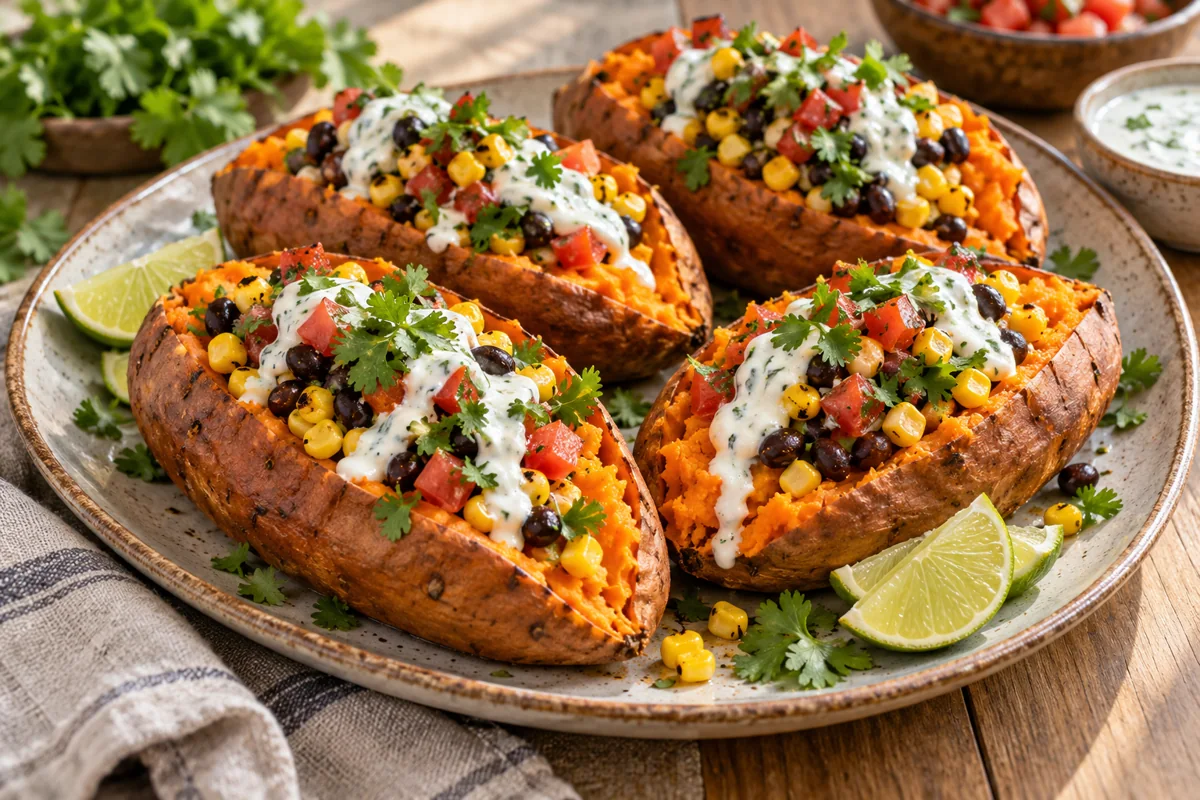
A stuffed sweet potato works best when its topping complements a soft center. Beans can add a separate bite, corn another texture, and herbs or citrus a fresher finish. You do not need all possible toppings at once. Consider what is already in the filling before adding another sauce, cheese, or spice mixture. A clear combination is easier to repeat and easier to describe to someone sharing the meal.
The site's black bean and corn stuffed sweet potatoes recipe gives measured ingredients and a complete sequence. Use that card for dinner preparation rather than trying to infer a recipe from this guide. If you change a topping, check its preparation and dietary requirements. A product described as vegetarian or plant-based still has a full ingredient list worth reading, especially when allergies or strict ingredient preferences are involved.
Coordinate roots and fillings on a busy evening
Start the component that takes longest and prepare the rest while it cooks. Whole sweet potatoes may give you time to drain beans, chop herbs, and mix a finishing sauce. A quick microwave method creates a different schedule and may require the filling to be ready sooner. Read the whole recipe before beginning so a hot root is not waiting while you discover another component needs a long simmer.
Keep cooked fillings at appropriate temperatures and handle leftovers safely. If the filling includes poultry, seafood, or other ingredients with specific cooking requirements, follow those independently. A steaming sweet potato does not establish the doneness of an added protein. For a simple first attempt, a checked cooked-bean filling reduces the number of simultaneous cooking tasks and lets you focus on achieving the sweet potato texture you want.
Compare substitutes by the job they need to do
Ordinary potatoes, squash, and other roots can sometimes fill a similar place in a meal, but they change flavor, moisture, and structure. A baked potato offers a different center from a sweet potato. Squash may be useful in a mash or roasted bowl while being less convenient as a direct stuffed shell. Decide whether the ingredient provides sweetness, bulk, a holding shape, or a particular texture before choosing a replacement.
Do not transfer a whole-root cooking time to a different vegetable without a suitable method. Similarly, a canned sweet potato product may already be cooked and may include additional ingredients. Use the label and a recipe appropriate to that format. Substitution is most successful when you preserve the needed role while acknowledging the changed result, rather than promising that every orange vegetable will behave the same way.
Troubleshoot firm centers and soft surfaces
A firm center in a whole sweet potato usually calls for more appropriate cooking time, not another topping. Check the thickest part and continue according to the method. If the exterior is darkening too quickly, assess the oven, size, and recipe rather than assuming an even higher temperature will help. Large differences in root size make the batch harder to finish together, so note that shopping choice for next time.
Roasted pieces that are soft without the desired browned edges may have been crowded, too wet, or cut inconsistently. Pieces that burn while remaining firm may be too large for the chosen heat and timing, or carry a coating that darkens quickly. Name the problem precisely. Changing the spice blend cannot explain a tray-space issue, and extra oil is not a universal repair for every soft roasted vegetable.
Cool and store cooked portions promptly
Cooked sweet potatoes and their fillings need prompt, safe storage. Use shallow containers and refrigerate rather than leaving a large assembled batch at room temperature. Follow the linked food-safety guidance for leftovers and any product-specific instructions. Keep toppings separate when that helps both handling and texture. Label the cooking date and ingredients so a stored portion remains easy to identify.
Freeze only in suitable containers and expect some texture change after thawing. A mash and a whole stuffed root will not necessarily respond identically. Plan portions for actual meals rather than creating a large frozen block that is inconvenient to use. Safe storage preserves the opportunity for another meal, but it does not make the ingredient's original texture permanent or correct food that was left out too long before chilling.
Reheat and finish with a clear serving plan
Choose a reheating method suited to the portion and follow food-safety guidance for even heating. A dense whole root can heat differently at the edge and center. A filling may need separate attention if the components have different textures. Add fresh herbs, lemon, or a cold finishing element only after the main portion is appropriately heated, rather than exposing every garnish to the full reheating cycle.
Keep a note of the variety, size, method, and texture you liked. Those observations make the next purchase and cooking session easier. Sweet potatoes become a reliable dinner ingredient when their form matches the method and their toppings provide useful contrast. Start with one clear preparation, learn the tenderness cues, and use complete recipes for measurements. Then a root on the counter can lead to a planned meal instead of another uncertain estimate.
Frequently asked questions
Can I microwave sweet potatoes?
Yes, with a method suited to the root size and your appliance. Use a microwave-safe dish, follow piercing instructions and test the center.
Should I peel them?
It depends on the dish. A stuffed whole root uses the skin for structure; mash may suit peeling. Wash before either preparation.
Why are my roasted cubes soft?
Check spacing, surface moisture and cut consistency. Crowding can trap moisture around the pieces.
Sources and further reading
These references support ingredient and handling guidance. They have not tested or endorsed recipes on this site.
Use complete recipes for measurements, and follow product and equipment instructions. Meal suggestions here avoid pork and alcoholic cooking ingredients; check packaged products and personal dietary requirements separately.