How to Cook Broccoli: Florets, Stems, Frozen Broccoli and Better Texture
Compare fresh and frozen broccoli, prepare florets and stems, and choose roasting, steaming, stir-frying or baking for the texture you want.
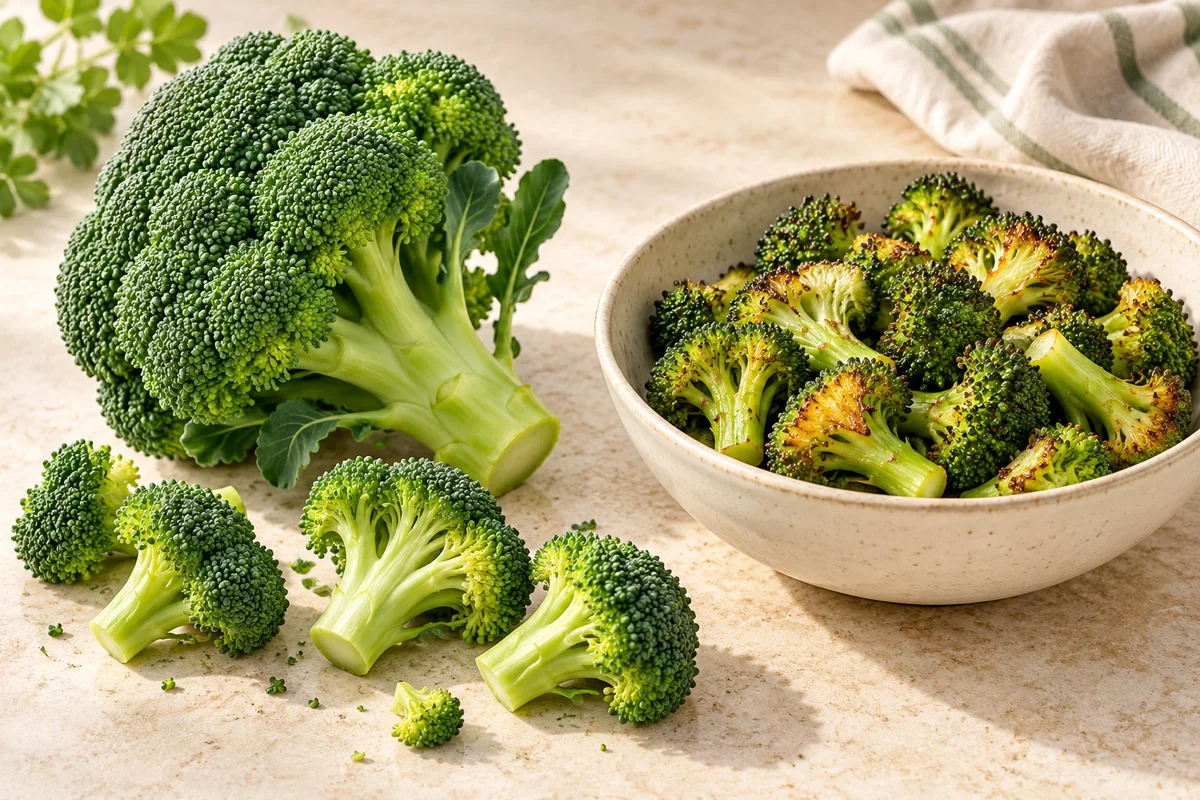
Broccoli can be crisp at the edges, tender in a sauce, or lightly cooked for a bowl. Those results come from different methods, and the ingredient needs a little planning before it reaches the pan. A thick stem does not cook like a small floret, and frozen broccoli brings different surface moisture from a freshly cut head. Understanding those differences is more useful than looking for one exact cooking time that claims to cover every version.
This guide explains shopping, cutting, method selection, seasoning, and troubleshooting. It connects to the site's broccoli recipes without copying their ingredient lists into another recipe page. Suggestions avoid pork and alcoholic cooking ingredients. Follow package and appliance directions for the product you use, and choose the final texture for the meal. The images are 3D illustrations rather than photographs of a tested preparation, and cooking times should be checked against your actual cut size and equipment.
Choose the texture before choosing the method
Roasting is useful when you want a drier surface and browned edges. Steaming gives a different result, with moisture and tenderness taking priority. Stir-frying can suit small pieces in a quick meal, while broccoli in a bake meets sauce and continues cooking with the other components. None of these methods is automatically the correct way to cook broccoli. The right choice fits the dish you want to serve.
Picture the finished plate before cutting. Large roasted pieces may be attractive beside a grain bowl, but smaller pieces can be easier to eat through a rice bake. If you want a sauce to reach every bite, the size and amount of broccoli affect that balance. A method chosen for the actual meal reduces the temptation to keep cooking until the vegetable becomes softer than you originally intended.
Buy a whole head or prepared florets deliberately
A whole head gives you both florets and a usable stem, provided the product is in good condition. Prepared florets can save cutting time, but the bag still needs checking for freshness, handling directions, and piece size. Choose broccoli that looks suitable for use and avoid products with slime, mold, or significant deterioration. A bargain is less useful if much of the vegetable will be discarded before dinner.
Think about how soon you will cook it. A large quantity of fresh broccoli can be convenient when several meals are planned, but frozen broccoli may fit a less predictable schedule better. Buy the form that suits your routine rather than treating one format as inherently more serious cooking. Consistent freshness and a clear preparation plan matter more to dinner than whether you cut every floret yourself.
Understand what frozen broccoli changes
Frozen broccoli is a practical ingredient, but it should not be treated as though it has exactly the same surface conditions as freshly cut broccoli. Read the package for preparation and cooking instructions. Ice and released moisture can change a roasting tray or skillet, especially if the pieces are crowded. A recipe designed for frozen broccoli is a better starting point than applying a fresh method unchanged and blaming the ingredient.
Do not assume thawing is always required or always undesirable. It depends on the method and the product directions. If a bake calls for thawed and drained broccoli, that preparation affects the surrounding sauce. If a roasting recipe starts from frozen, follow its approach to spacing and heat. Identify the preparation state in the ingredient list before assembling the dish so excess water does not become an unexpected part of dinner.
Wash and dry fresh broccoli for its next use
Prepare fresh broccoli with clean hands, tools, and surfaces, following appropriate produce handling. Rinse as needed and pay attention to the branching florets where dirt can remain. For roasting, let excess surface water drain and dry the pieces suitably. For steaming, a little clinging water has a different effect. Washing and drying are related steps with different purposes, so decide how dry the surface needs to be for the chosen method.
Prepare the vegetable before heating the pan or oven tray. Trying to dry florets while garlic is already cooking or oil is becoming too hot creates unnecessary pressure. A short preparation sequence is enough: inspect, wash, trim, cut, and organize the pieces. Keep raw meat preparation separate from the vegetable and any ready-to-eat toppings. A clean cutting board is part of the meal plan, not an optional final cleanup task.
Cut florets to comparable thickness
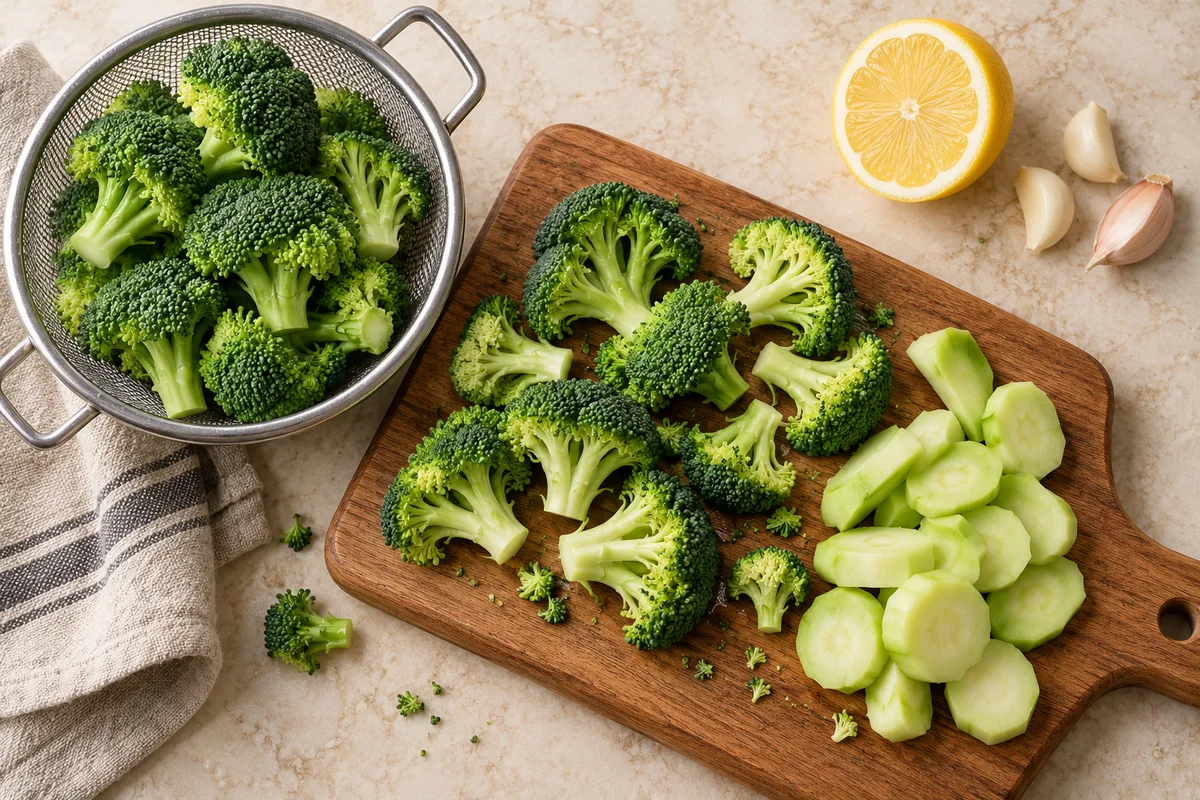
Use the natural branches as a guide and divide large florets into pieces suited to the recipe. The aim is not identical shapes but comparable cooking thickness. A tiny loose tip and a large branch with a thick stalk will not finish together. If you leave some pieces much larger, plan to handle them differently instead of scattering everything onto a tray and expecting one timer to solve the difference.
Consider the eating experience too. A large floret can be awkward in noodles or a spoonable bake, while pieces that are too small may dry out quickly during roasting. For a first attempt, follow the recipe's cut description and notice the result. Record a useful size in plain language or a photograph for yourself. That is more practical than relying on the vague instruction to chop broccoli next time.
Use the stem instead of discarding it automatically
A broccoli stem can provide useful pieces when it is fresh and prepared appropriately. Trim any dry end and assess the outer layer. A tougher exterior may need peeling to reach a more tender interior. Cut the usable portion to a size that suits the method. Thick stem chunks need different attention from delicate floret tips, so do not assume they belong in the pan at exactly the same moment.
Thin slices or small pieces can work in a stir-fry or another preparation written for them. You can also keep the stem for a separate suitable use if the main recipe only needs florets. This is a choice about texture and planning, not a rule that every part must appear in one dish. Avoid saving an unmarked piece indefinitely. Identify it and use it while it remains suitable, or buy a prepared format that better matches your needs.
Roast with space around the pieces
For roasted broccoli, use a recipe's oven setting, oil amount, and cut size together. Spread the florets so hot air and the tray can affect their surfaces rather than trapping moisture in a mound. A measured coating of oil is easier to distribute evenly than a large pour over the top. Turn or reposition as directed, and keep an eye on small tips that can darken before thicker sections become tender.
A commonly used roasting range is roughly 400–425°F, or about 200–220°C, but the complete method and your oven matter more than that range alone. Begin checking before the end of the suggested time. Test the stem portion as well as the appearance of the florets. Browned tips can be appealing; blackened, bitter fragments are a different result. More color is not a reason to ignore whether the thicker pieces are cooked as you prefer.
Steam for a tender, moist result
Steaming is useful when you want broccoli without a roasted exterior. Set up the equipment according to its instructions and avoid letting the vegetable sit submerged if your method intends steam rather than boiling. Cut pieces consistently and check tenderness in stages. A recipe's time assumes a particular size and starting condition, so use it as a prompt to assess rather than a guarantee that every piece will be identical.
Have the serving or finishing step ready before the broccoli is done. Leaving it covered over heat while you prepare everything else can carry it beyond the texture you wanted. Move it appropriately when ready and add a measured seasoning or sauce. If you prefer a little resistance in the stem, check early. If the broccoli is intended for a soft purée or another longer-cooked dish, choose a method written for that goal instead.
Boil or blanch with a clear stopping point
Boiling and blanching use direct contact with water and need their own timing. Use the method's water amount and add pieces carefully. Test the thicker parts and drain promptly when the target is reached. A long wait in hot water is still cooking even if you are no longer watching the clock. Coordinate the next step so draining does not become an afterthought while you finish a sauce.
If a recipe includes a cooling stage after blanching, follow it as written and drain appropriately before the broccoli enters another dish. Extra water carried into a salad or bake changes the result. Do not add a blanching stage automatically to a roasting recipe; it introduces moisture and another variable. Choose a coherent sequence for the final use instead of accumulating every preparation tip you have read.
Stir-fry pieces that fit a quick method
A stir-fry usually works best when the broccoli is prepared before the pan becomes hot and the pieces suit the short cooking sequence. Small, fairly even florets and appropriately cut stems are easier to manage than large branches. Read the whole recipe to see whether it uses a brief covered stage or a measured amount of liquid. That detail can help the thicker parts cook without burning the surface.
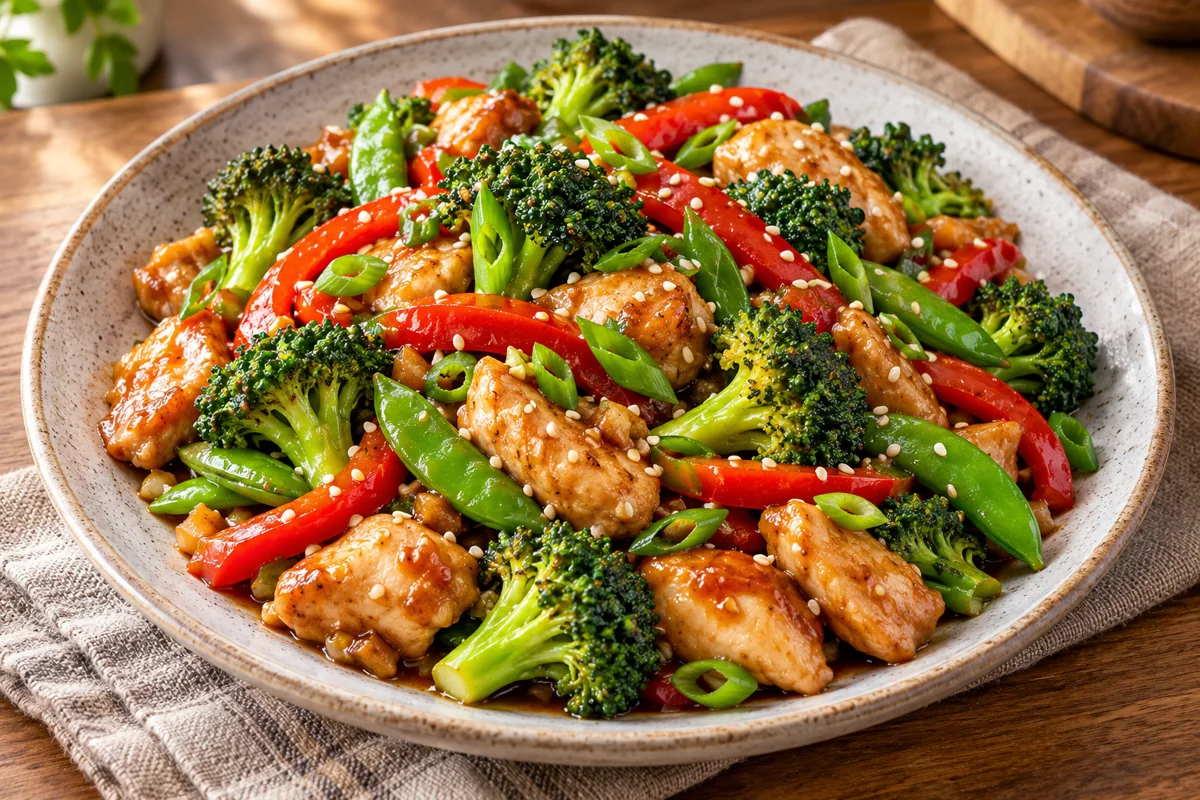
Cook in an amount the pan can handle. A deep pile can release and trap moisture rather than giving the result intended by the method. Keep any raw protein preparation separate and follow its cooking requirements. The site's chicken and broccoli stir-fry provides a complete sequence without soy sauce, but the actual sauce products still need checking against your dietary preferences. A name describes part of the recipe, not every property of every ingredient.
Plan broccoli for a casserole or rice bake
A bake brings broccoli into contact with sauce and other ingredients, so its starting condition matters. Raw, briefly cooked, thawed, and fully cooked broccoli do not contribute the same texture or water. Follow the recipe's specification. A piece that is ideal as a steamed side may become too soft after a full baking stage, while a large raw stem may remain firmer than the surrounding rice and sauce.
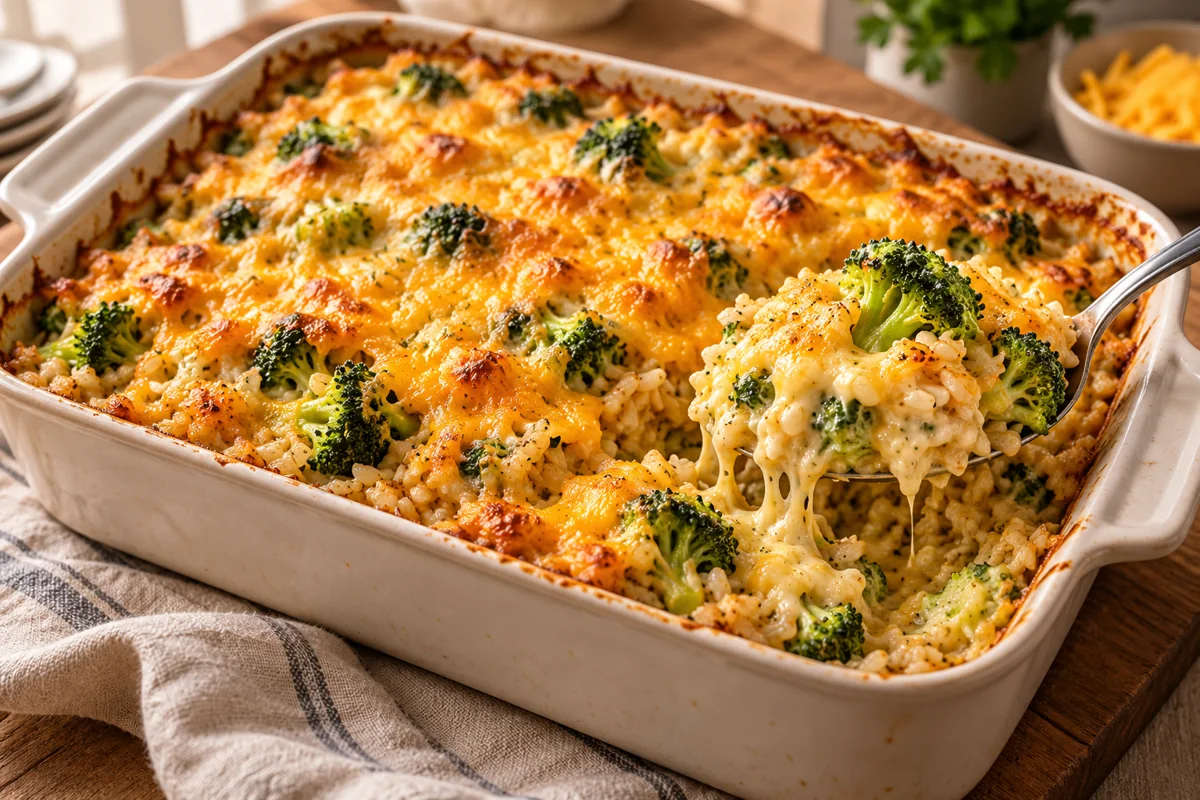
For the site's broccoli and brown rice bake, use the recipe card for amounts and preparation rather than combining unrelated instructions. If you change fresh broccoli to frozen, resolve the thawing and draining question before assembling the dish. Adding more cheese cannot reliably correct excess water introduced by an ingredient change. The most useful adjustment begins with understanding the vegetable's state when it enters the baking dish.
Season with garlic, lemon and herbs in stages
Garlic, lemon, herbs, and a little suitable oil can give broccoli a clear flavor direction without a complicated sauce. Add delicate or easily scorched ingredients at the stage intended by the method. Small garlic pieces may darken faster than thick broccoli stems, so putting everything on the tray at the beginning is not automatically the best choice. Read the sequence and keep the finish simple enough to assess.
Lemon juice and zest have different effects. Juice changes acidity and adds moisture; zest contributes aroma without the same liquid. Add a small amount, taste, and increase only if needed. If using a prepared seasoning, check its ingredients and salt before adding more. For a pork-free and alcohol-free meal, broth, sauces, and toppings need the same label attention as the main ingredients. A vegetable base does not settle the whole dish's composition.
Cheese, nuts and crunchy toppings change the dish
A topping can add useful contrast, but it also changes the ingredient list and sometimes the best serving moment. Cheese introduces milk and may require rennet checks for a vegetarian preference. Nuts, seeds, and breadcrumbs bring their own allergen or gluten considerations. Keep optional toppings separate when serving people with different needs, and describe the ingredients rather than relying on a broad label that may not apply to everyone.
Choose a topping because it adds something the dish lacks. If roasted broccoli already has dry, browned edges, a heavy crunchy layer may not be necessary. If a bake is uniformly soft, a suitable finish can add contrast. Taste the whole meal before adding more salt through cheese or a prepared crumb mixture. A garnish should complete the balance, not hide a vegetable texture you did not intend.
Pair broccoli with components that cook on their own schedule
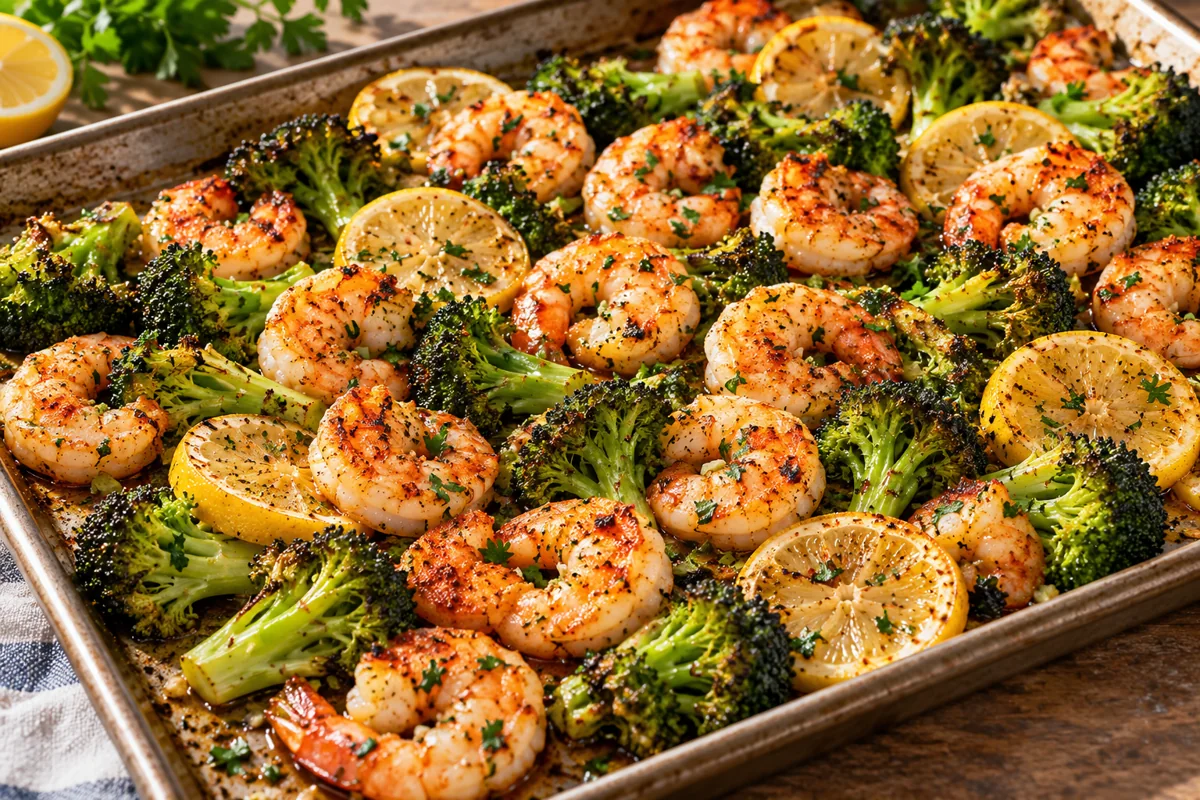
Broccoli can share a tray or pan with other ingredients only when their size and cooking needs are compatible with the method. Shrimp, chicken, potatoes, and broccoli do not automatically finish together because they are placed on one tray. Follow a complete recipe that plans the sequence, or cook components separately. Food-safety requirements for raw proteins remain their own responsibility even when the vegetable looks ready.
The site's garlic shrimp and broccoli recipe offers one planned combination, while the chicken stir-fry and rice bake show different uses. Choose the meal that fits your available equipment and attention. On a busy evening, a separate grain and a straightforward vegetable method may be easier than a crowded one-pan experiment. Fewer dishes can be convenient, but coherent cooking conditions are what make the meal workable.
Troubleshoot watery, tough or overly soft broccoli
Watery results call for attention to the ingredient's starting moisture, draining, crowding, and sauce balance. Tough stems may need a different cut, peeling, or more appropriate cooking. Overly soft florets point toward timing, continued heat, or a preparation that cooked them twice beyond your preference. These problems are different, so one universal correction such as more heat or less water will not address all of them.
If a batch is softer than planned, use it in a preparation that welcomes that texture rather than continuing to roast it in the hope of restoring structure. If the surface is burning while the center stays firm, reconsider piece size and the chosen method. Keep a short note about the cut and starting form. That makes the next attempt more informative than changing seasoning while repeating the same structural problem.
Store fresh and cooked broccoli appropriately
Follow the product's refrigeration and use instructions for fresh or prepared broccoli. Keep it separate from raw meat and inspect it before cooking. Frozen broccoli should remain under the storage conditions on its package. Do not treat a thawed bag as though it has the same storage status as an unopened frozen product. The preparation state affects handling as well as cooking.
For cooked broccoli, cool and refrigerate promptly in suitable containers and follow the linked leftover guidance. Keep sauce or toppings separate when practical for the intended texture. Label the preparation date, especially when several similar vegetable containers are in the refrigerator. A crisp roasted exterior will not necessarily remain unchanged after storage, so plan leftover uses that accommodate a softer texture rather than promising the same result as immediate serving.
Reheat with realistic texture expectations
Choose a reheating method that suits the complete dish and follow food-safety guidance for even heating. A broccoli rice bake has different needs from a small portion of plain florets. Keep fresh finishes until the main portion is ready, and avoid reheating a large batch repeatedly when you only need one meal. A hot edge does not establish that the center of a dense mixed dish is equally heated.
Broccoli becomes easier to cook when you identify its form, choose the intended texture, and cut for the method. Keep those decisions consistent while learning, then vary the sauce or serving style. A useful record of fresh or frozen, cut size, cooking method, and stopping cue will help you repeat what you liked. The goal is a vegetable that fits dinner, rather than a single supposedly perfect technique imposed on every meal.
Frequently asked questions
Can I use broccoli stems?
Usable fresh stems can be trimmed and, when needed, peeled. Cut them for the method because thick stems cook differently from floret tips.
Should frozen broccoli be thawed?
Follow the package and recipe. A bake using thawed, drained broccoli differs from a method intended to roast from frozen.
Why is my broccoli watery?
Consider starting moisture, draining, pan crowding and the sauce. Identify the source rather than adding cheese or oil automatically.
Sources and further reading
These references support ingredient and handling guidance. They have not tested or endorsed recipes on this site.
Use complete recipes for measurements, and follow product and equipment instructions. Meal suggestions here avoid pork and alcoholic cooking ingredients; check packaged products and personal dietary requirements separately.