About this recipe
A layered celebration dessert with a source-based formulation and an English preparation guide. Ingredient ratios and pan sizes were checked against the credited recipe; Best Quick Recipe has not independently baked this version. The image is an AI-generated illustration, not a photograph of a tested batch.
What is Boston cream cake?
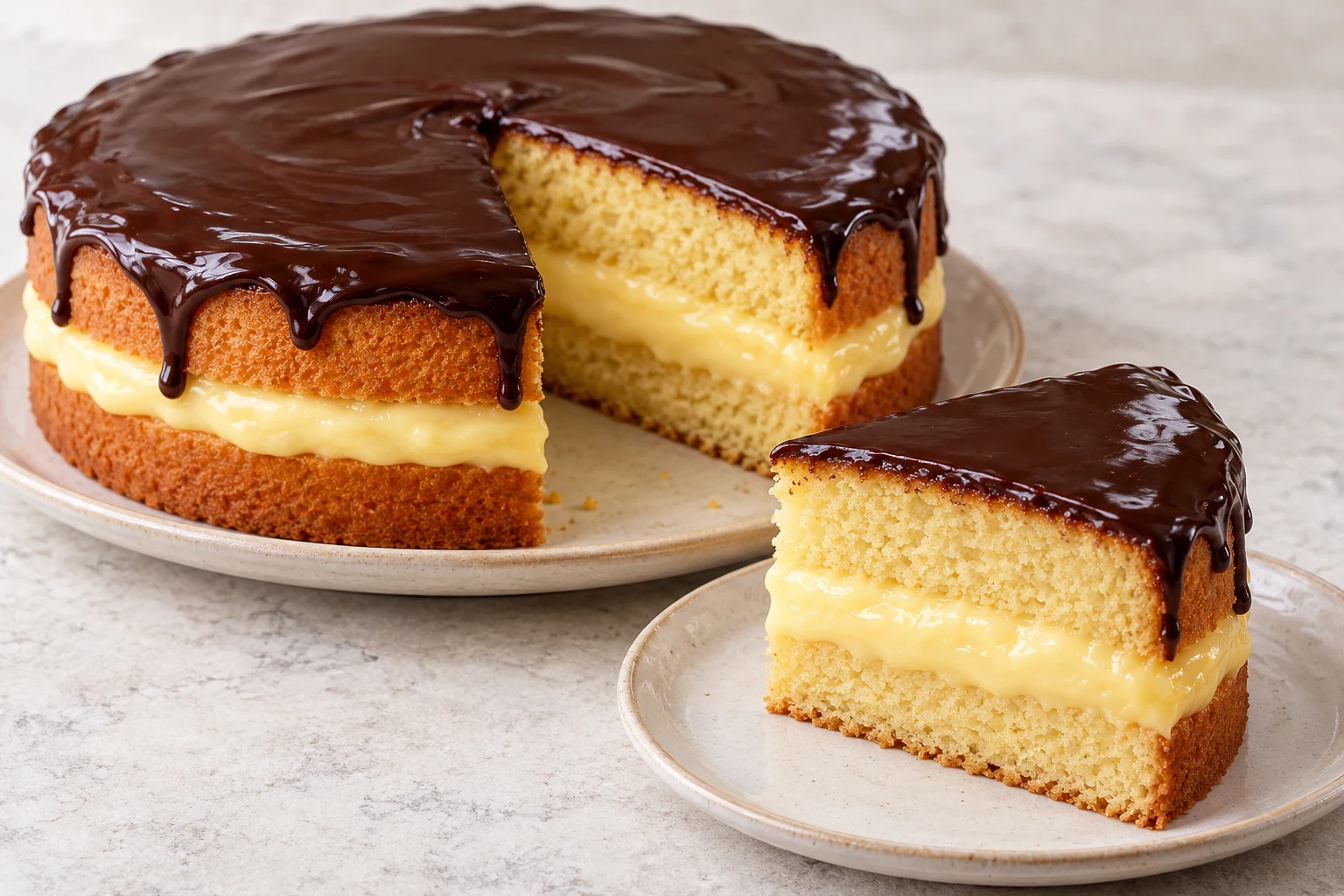
Despite the traditional name Boston cream pie, this dessert has baked cake layers rather than a pastry crust. A cooked milk-and-egg filling separates the two vanilla layers, and chocolate forms a thin topping. It is a useful introduction to layered desserts because it has fewer components than a frozen entremets. There is no need to split the baked layers, make a fruit insert or buy a specialist setting agent.
Preparing a tidy custard workstation
Set the sieve, heatproof container and covering material beside the stove before heating the milk. Keep the whisk within reach and use a saucepan with enough room to whisk without splashing. Separate the yolks into a small bowl first so a broken shell does not end up in the pan. As with any hot milk mixture, turn pot handles away from the edge and protect your hands when moving the saucepan.
Before you start: weigh and organise
Read the whole card before opening the ingredients. Set out one bowl for each component and label similar-looking quantities, especially sugar and cream. Weigh in grams where a weight is given; use level measuring spoons for small amounts. A tablespoon means 15 ml and a teaspoon 5 ml. Prepare the specified pans before mixing. Check that your cooling rack, cake board and refrigerator shelf have enough room for the finished cake. Keep eggs and dairy out only as long as needed for preparation.
A photograph is a guide, not a doneness test
The illustration shows the intended style, but it cannot tell you whether your actual cake is cooked or its filling has set. Use the checks in the instructions. Oven settings, pan material and the size of your eggs can change a baking time. Check near the beginning of the stated range and avoid opening the oven repeatedly. A skewer should test sponge, not a pocket of fruit or melted chocolate. Never taste uncooked batter containing raw flour or eggs.
Ingredient requirements and allergens
There is no gelatin, pork or alcoholic drink in this formulation. Where vanilla or coconut flavouring is listed, use a product explicitly labelled alcohol-free rather than ordinary alcohol-based extract. Check packaged chocolate, wafers, cream cheese and flavourings for ingredients suitable for your needs. The recipe is not a halal certification. It contains eggs, milk and wheat unless otherwise indicated; read every label for additional allergens and cross-contact information.
Portioning and serving
Place the cake on a firm, level serving surface. Use a long sharp knife and wipe the blade between cuts; warm water helps clean it, but dry the blade before the next slice. Serve small portions of a rich celebration cake and return the rest to the refrigerator promptly. Keep refrigerated at 4°C / 40°F or below. For home preparation, this guide uses a conservative two-day refrigerated storage recommendation. Use a covered cake box so the filling is protected from strong refrigerator odours.
Avoiding sliding layers
Put the lower sponge flat side down on a stable plate. If the upper sponge has a pronounced dome, trim it carefully once cool. Use an offset spatula to spread the filling rather than pushing hard with the cake layer. Keep the finished cake level while chilling and do not put heavy decorations on top. If the custard is still warm or fluid, return it to the refrigerator rather than trying to hold the layers together with skewers.