How to Sauté Mushrooms: Cleaning, Browning and Cooking Without Wine
Prepare cultivated mushrooms, manage pan space and moisture, brown them carefully and build flavor without wine.
Mushrooms can look simple in the shopping basket and behave unpredictably in the pan. A crowded batch releases liquid, thin pieces shrink, and garlic can burn while you wait for the surface to brown. The solution is not always a higher flame or more butter. Choosing a suitable variety, preparing comparable pieces, and giving the pan a manageable amount of food are more useful starting decisions. Once you understand those choices, mushrooms become easier to use in bowls, pasta, and rice dishes.
This guide focuses on cultivated culinary mushrooms from a reliable food retailer. It is not a wild-mushroom identification guide. It explains preparation, pan cooking, seasoning, and practical troubleshooting, with no pork or alcoholic cooking ingredients in the suggestions. The site's mushroom and pea risotto provides a separate complete recipe without wine. Images here are 3D illustrations, not photographs of a documented test, and no restaurant-style result is guaranteed by a fixed cooking time.
Buy cultivated mushrooms for a known cooking purpose
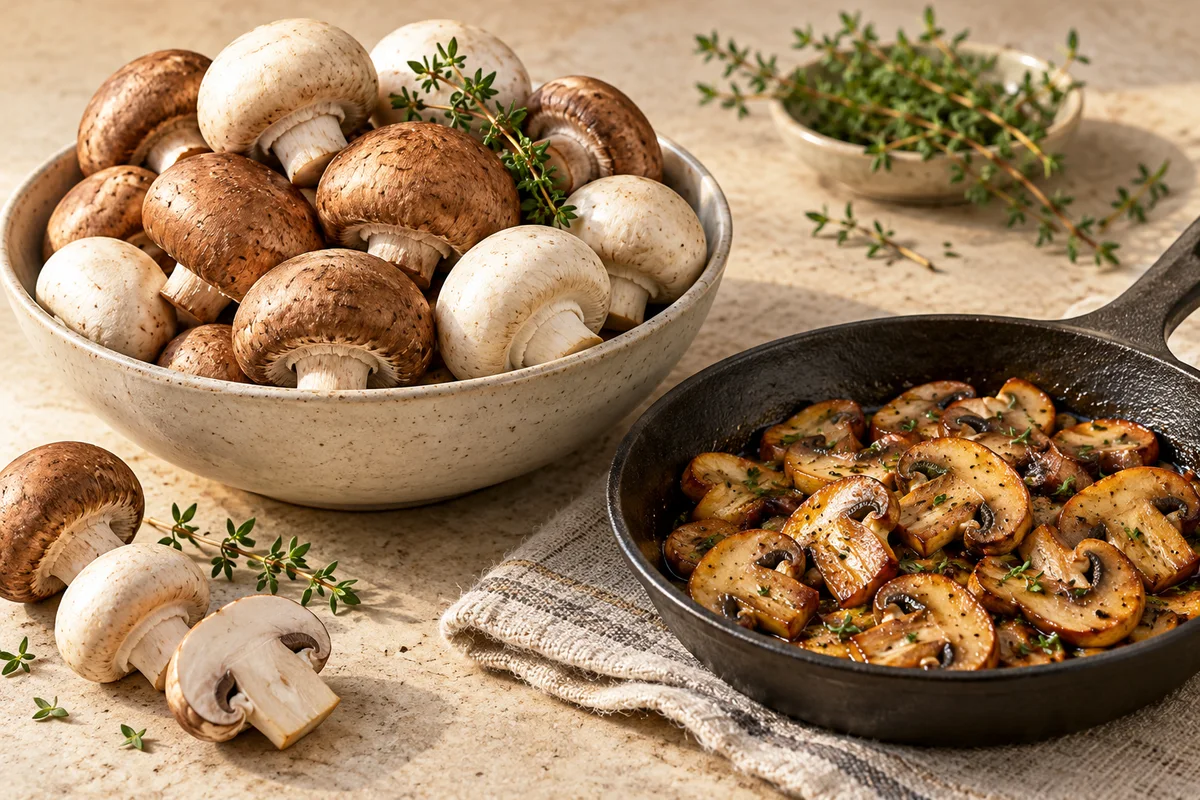
Choose mushrooms sold as food by a reliable retailer and identify the variety on the package or display. Familiar cultivated button and cremini mushrooms are useful starting points for a basic sauté, while other culinary varieties can bring different shapes and textures. Do not treat a visual resemblance to an online photograph as proof that a foraged mushroom is edible. Cooking advice and identification are separate questions.
Think about the meal before choosing the package. Small whole mushrooms, broad caps, and mixed clusters need different preparation to cook evenly. A mixed selection can be interesting, but one familiar variety makes the first attempt easier to assess. If the goal is a repeatable risotto topping, consistent pieces may matter more than a dramatic assortment. Buy for texture and use, not only for how attractive the package looks.
Inspect freshness and choose a manageable quantity
Look for a product in suitable condition and follow its storage advice. Avoid mushrooms with slime, mold, or other deterioration that raises a spoilage concern. A small amount of natural surface variation is different from a compromised product, but uncertainty should not be covered with seasoning. Buy an amount you can use while it remains suitable, particularly if your meal plans are likely to change during the week.
Remember that mushrooms lose volume during cooking. The raw quantity that fills a large bowl may not look equally substantial after sautéing. That does not mean you should crowd the pan to compensate. Plan the serving role: a small topping, a vegetable side, and the main texture in a pasta dish need different quantities. Keep the amount realistic for both the meal and the pan you have available.
Store the raw product according to its needs
Keep mushrooms under the conditions recommended for the product and avoid handling that leaves them wet or crushed before use. Leave useful labeling in place so you know the variety and purchase date. If you move them to another container, maintain suitable storage rather than sealing an unidentified damp mixture and forgetting it. A clear plan for when you will cook them helps more than buying a large amount without a meal in mind.
Do not wash the entire supply merely because one portion is needed now. Prepare what you will cook and keep the remainder appropriately. Raw mushrooms and cooked leftovers have different handling needs, so store and label them separately. If a package includes a prepared sauce or seasoning, follow that product's directions and ingredient checks rather than assuming it behaves like plain fresh mushrooms.
Clean without turning preparation into a soak
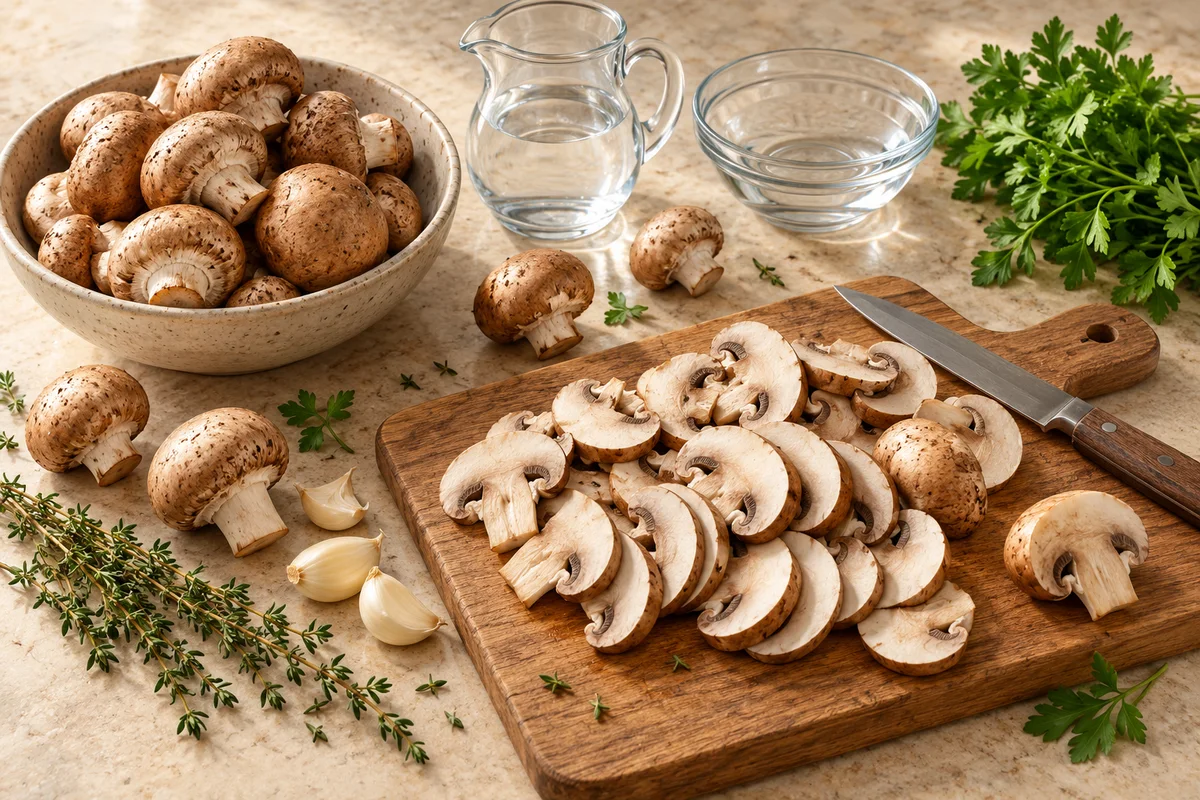
Inspect the mushrooms and remove visible dirt with an appropriate gentle method. Depending on the product and condition, wiping or a brief rinse followed by drying may be suitable. Avoid leaving mushrooms submerged while you work on something else. The practical goal for sautéing is a clean ingredient without unnecessary surface water entering the hot pan. Prepare them close to cooking and handle delicate varieties gently.
Dry the surface suitably before slicing or cooking. If you use water, allow it to drain and pat as needed rather than tipping a wet bowl directly into hot fat. A long cleaning ritual is not necessary for ordinary retail mushrooms, but skipping inspection can leave grit in the dish. Match the method to the actual product instead of treating every mushroom as equally dirty or equally delicate.
Trim stems according to the variety
Some mushroom stems are useful when trimmed, while tougher stems on other varieties may need separate treatment or removal. Check guidance appropriate to the mushroom you bought. Do not automatically discard every stem, and do not automatically include every part in a quick sauté. A stem that needs a different method can make the batch seem uneven even when the caps are cooked as intended.
For familiar button or cremini mushrooms, trim any dry end and cut the usable pieces to suit the meal. Keep the pieces stable on the board and use a suitable knife. If a mixed package includes unfamiliar shapes, take time to identify their preparation needs before the pan is hot. A small amount of advance reading is more useful than trying to resolve a tough stem while the rest of the batch browns too far.
Choose slices, quarters or larger pieces deliberately
Thin slices give a different eating experience from thick slices or quarters. They expose more surface and can shrink into small fragments, which may suit a sauce but not the substantial bite you wanted in a bowl. Larger pieces retain a more noticeable shape. Choose the cut for how the mushrooms will be served rather than assuming the thinnest slice is always the most refined preparation.
Keep thickness reasonably consistent within a batch. A mixture of paper-thin scraps and thick chunks complicates both browning and doneness. If using several varieties, consider cooking them in separate batches when their structures differ substantially. You can combine them later with a shared seasoning. This gives each ingredient suitable attention instead of expecting one crowded pan to solve every difference in shape and moisture.
Pick a pan that gives moisture somewhere to go
A wide suitable skillet gives mushrooms contact with the surface and space for released moisture to evaporate. A small deep pan filled high creates different conditions. If you want browned pieces, match the amount of mushrooms to the available surface. Cooking two batches is often more controllable than starting with a mound and waiting for it to shrink enough to resemble a single layer.
Choose cookware and utensils appropriate to the heat and method, and follow their care instructions. A pan does not need to be recklessly hot to be useful. Preheat as the method directs, add suitable fat, and stay attentive. If the fat is smoking heavily or seasonings are blackening immediately, address the heat rather than treating those signs as proof that you are achieving a better sauté.
Start with a controlled amount of suitable fat
Oil, butter, and combinations have different flavors and behavior. Choose what fits the recipe and any dietary requirements, then measure rather than pouring repeatedly whenever the mushrooms seem absorbent. Early in cooking, the surface can take up fat before the batch changes as it releases moisture. Adding another generous amount at every stage can leave the final dish heavier than intended.
Butter contributes milk and can darken under heat, so a recipe using it needs a suitable sequence. Oil is not a guarantee against scorching if the pan is too hot. Keep garlic and delicate herbs ready for their later stage rather than dropping them into the pan at the beginning and hoping they last. The fat's job is part of the cooking system; it is not a universal repair for crowding or excessive surface water.
Give the first side time before moving everything
Arrange a manageable layer and follow the method's instruction about leaving the mushrooms briefly undisturbed. Constant stirring can make it harder to develop color on a particular surface. When the pieces are ready to move, use a suitable utensil and turn them without tearing or crushing. The Mushroom Council's basic method emphasizes a single layer and browning one side before turning; apply that principle with attention to your own pan.
Watch and listen rather than relying on an exact minute count. Variety, thickness, starting moisture, and heat all affect the pace. A gentle sizzle and visible progress are more informative than repeatedly raising the burner because the clock feels slow. If one batch is crowded, moving it more often does not create extra pan area. Remove some to another batch when needed and keep your method coherent.
Understand the liquid stage
Mushrooms may release noticeable liquid as they cook. That is not automatically a failure, and immediately adding more fat does not remove the water. Assess the amount in the pan and whether the mushrooms have room. Continue according to the method, allowing moisture to reduce where appropriate. If you began with a very wet or crowded batch, acknowledge that the conditions differ from a dry single-layer sauté.
Choose the final texture for the dish. A saucy preparation may welcome some moisture, while a browned topping needs a different finish. Do not cook indefinitely simply to match a photograph if the pieces are becoming smaller and tougher than you want. A useful note for next time includes the raw quantity, pan size, and cut. Those details explain the liquid stage better than a vague statement that mushrooms always turn watery.
Add garlic and herbs at a stage they can survive
Garlic and tender herbs can bring a strong flavor direction, but they do not need the same cooking time as a full batch of mushrooms. Add them at the stage specified by the recipe so they can become aromatic without burning. Keep the heat controlled when the pan has become drier. A small piece of garlic can darken quickly against a hot surface even while a thick mushroom slice looks only lightly colored.
Thyme, parsley, black pepper, and lemon offer different finishes. Choose a simple combination on the first attempt so you can taste what the mushrooms contribute. If using a prepared seasoning, check its salt and ingredients before adding more. A mixture with an assertive seasoning does not automatically need a rich sauce as well. Taste a finished piece with its intended accompaniment before deciding the whole dish needs another layer.
Deglaze without wine or alcoholic substitutes
You do not need wine to loosen flavorful browned material from a suitable pan. A small amount of water or checked broth can be used in an appropriate method. Add liquid carefully, scrape with a utensil suited to the surface, and follow the recipe's reduction stage. Choose broth without pork or alcoholic cooking ingredients for the approach used here. A concentrate needs its own dilution directions.
Lemon juice is not an equal-volume replacement for wine. It brings a different level of acidity and is often easier to add in a small amount near the finish. Avoid replacing a large measure of wine with the same measure of juice and expecting a balanced result. An alcohol-free mushroom method should be planned as its own coherent preparation, with the liquid and seasoning chosen for what they actually contribute.
Cook onions and mushrooms with timing in mind
Onions and mushrooms can make a useful combination, but they release moisture and develop texture at different rates. Follow a recipe that plans their sequence, or cook components separately before combining. Adding a large quantity of both to a small pan can make it difficult to achieve the color you wanted. The issue is not solved simply by stirring harder or adding more seasoning.
Decide whether the onions should be soft, lightly golden, or more deeply cooked. Those are different goals and influence when the mushrooms join the pan. For a quick weeknight meal, keep the preparation realistic rather than promising deeply developed onions in a very short time. Use consistent cuts and taste the combination. A clear target helps you stop when the meal is ready instead of continuing until every ingredient has lost its distinct texture.
Add mushrooms to risotto without losing control
In risotto, the rice and mushrooms have different jobs. Rice needs a method that manages liquid and starch; mushrooms may be cooked separately to develop their own texture before joining. Follow the complete recipe rather than placing everything into the pot at once because both ingredients will eventually be served together. A well-planned sequence gives you more control over the liquid balance and the mushroom finish.
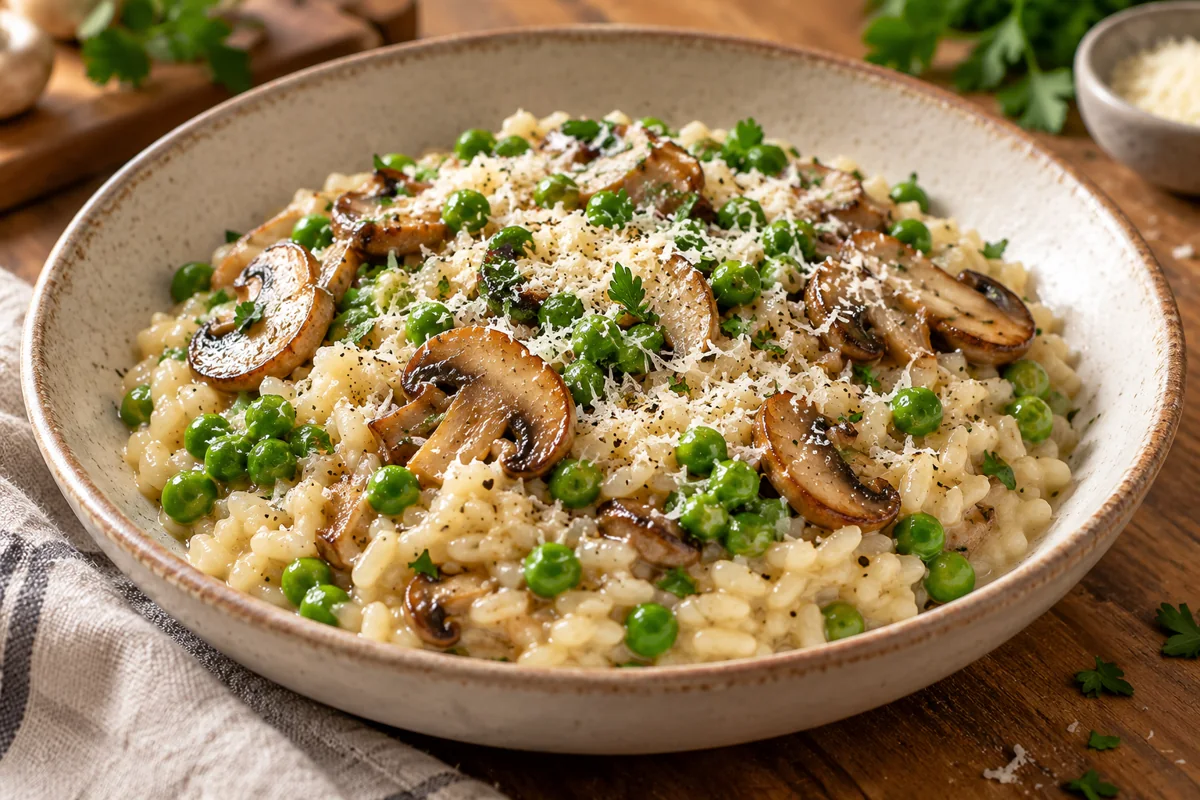
The site's mushroom and pea risotto without wine provides measured ingredients and its own cooking order. This guide supplies the ingredient decisions behind that meal. Check broth and cheese products as needed, including rennet information for a vegetarian preference. If you change the mushroom variety, consider the cut and moisture it brings. A different variety can be an enjoyable change without being an identical one-word substitute in every stage.
Use mushrooms in pasta, bowls and toppings
Sautéed mushrooms can supply a distinct savory component in pasta, a grain bowl, or a topping for a cooked vegetable. Think about the surrounding texture. If the mushrooms are soft and the base is creamy, a fresh herb or crisp accompaniment may bring useful contrast. If you want the browned surface to remain noticeable, avoid burying the pieces in a large amount of sauce long before serving.
Keep the first meal simple enough to notice the mushroom result. A strongly flavored sauce can make it difficult to assess whether your pan method improved. Once you have a preparation you like, vary the grain, vegetable, or finishing flavor while keeping the mushroom method steady. This creates practical flexibility without requiring a new technique every time you open a package.
Choose substitutes for texture rather than the word umami
There is no single replacement that duplicates mushrooms in every dish. Chickpeas can provide a separate bite, tofu can offer another structure, and vegetables can fill volume, but each needs its own preparation. If the mushrooms provide a browned topping, choose a replacement method that produces an appropriate surface. If they contribute moisture to a sauce, the adjustment is different. Identify the job before selecting the substitute.
Do not assume a prepared mushroom powder, stock cube, or sauce solves all dietary questions. Such products have ingredient lists and concentration instructions of their own. For someone who cannot eat mushrooms, adding a mushroom-based seasoning is not a meaningful substitute. Describe changes accurately and choose a complete method for the replacement. A similar savory impression does not make the ingredients compositionally or texturally identical.
Diagnose pale, rubbery or burnt results
Pale mushrooms may reflect moisture, crowding, or insufficient contact with the pan. Rubbery pieces may point toward the variety, cut, or a cooking approach that did not suit your intended result. Burnt flavor can come from garlic, butter, or scorched bits even when the mushrooms themselves are not uniformly dark. Taste components carefully and identify the source before changing the entire seasoning profile.
For the next attempt, keep one variety and cut consistent and adjust the relevant factor. Use a smaller batch if the pan was crowded, dry the surface if it was wet, or add garlic later if it burned. Do not compensate for every problem with more fat or higher heat. A small controlled improvement is easier to repeat than a successful meal produced by several unrecorded emergency adjustments.
Store leftovers and make the next batch easier
Cool cooked mushrooms promptly and refrigerate them in suitable containers, following linked food-safety guidance for the complete dish. Keep fresh garnishes separate and label the preparation date. Reheat according to the meal and check even heating. Expect a stored mushroom's surface to differ from one served directly from the pan; choose leftover uses that accommodate that change rather than promising the same crispness.
Record the variety, raw amount, cut, pan, and the point when you added garlic or liquid. Those details help explain what happened and make the next batch easier to repeat. Mushrooms become a reliable ingredient when the preparation matches the variety and the pan has a manageable amount to cook. Start there, use a complete recipe for the meal, and let the finishing flavor support the texture you have deliberately created.
Frequently asked questions
Do I need wine for sautéed mushrooms?
No. A suitable method can use water or checked broth for deglazing, with a little lemon added separately if desired.
Why are my mushrooms pale?
Check moisture, crowding and contact with the pan. A manageable layer is easier to brown than a deep pile.
Can this guide identify wild mushrooms?
No. It covers cultivated culinary mushrooms from reliable food retailers and must not be used for wild-mushroom identification.
Sources and further reading
These references support ingredient and handling guidance. They have not tested or endorsed recipes on this site.
Use complete recipes for measurements, and follow product and equipment instructions. Meal suggestions here avoid pork and alcoholic cooking ingredients; check packaged products and personal dietary requirements separately.