How to Cook Red Lentils: Texture, Ingredients and Everyday Uses
Learn how to cook red lentils, choose a texture, balance liquid, season with vegetables and spices, and troubleshoot thick or thin results.
Red lentils are useful when dinner needs body without a long simmer. Their small size makes them easy to measure, their mild flavor takes many seasonings, and their tendency to soften can turn a pot of vegetables into a substantial soup. The main challenge is understanding what kind of result this ingredient can deliver. Split red lentils are excellent for a spoonable dish; they are usually disappointing when treated like a firm salad bean. Start by choosing the texture you want, then select the cooking method, supporting vegetables, and finishing ingredients around that decision.
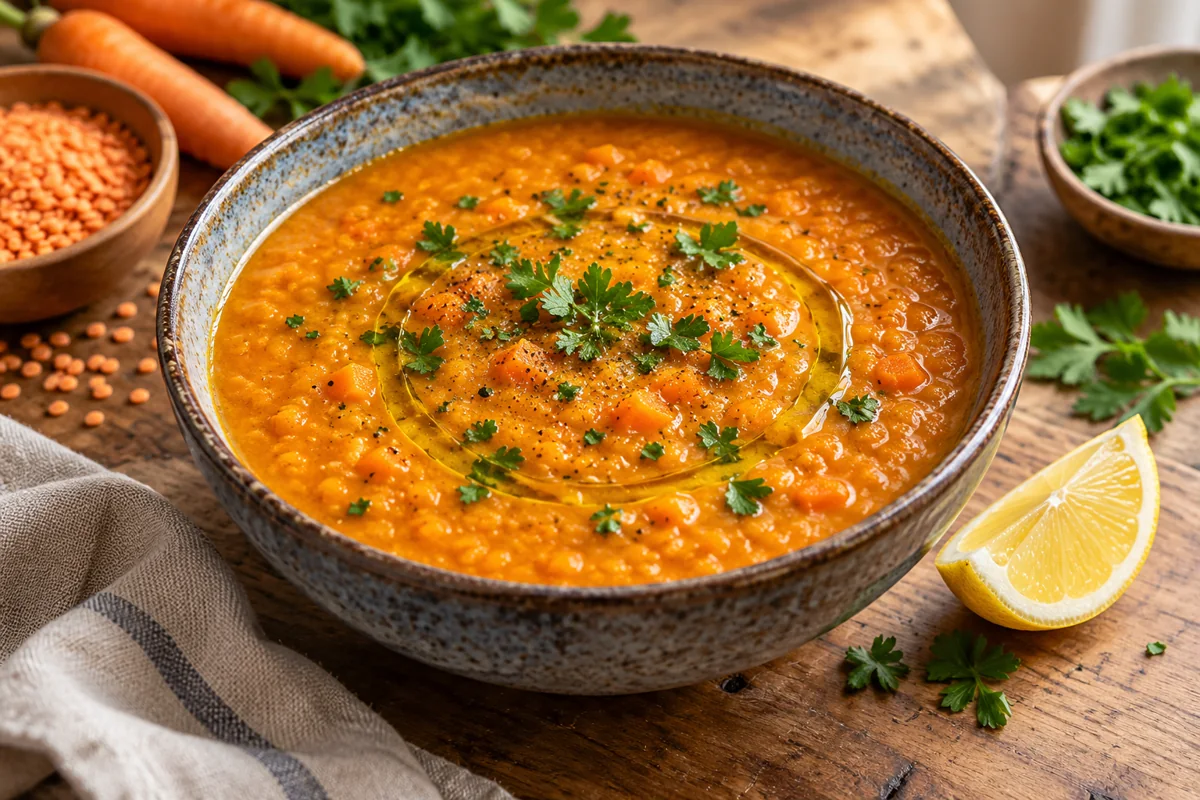
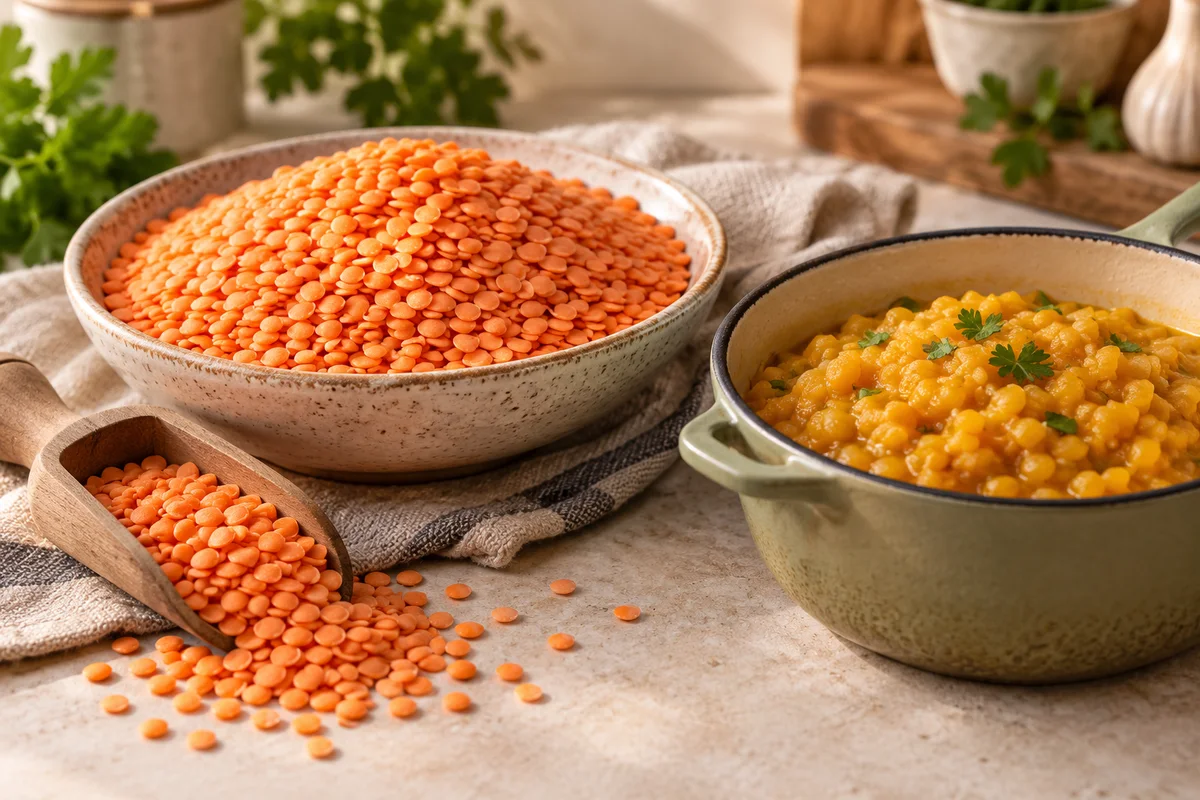
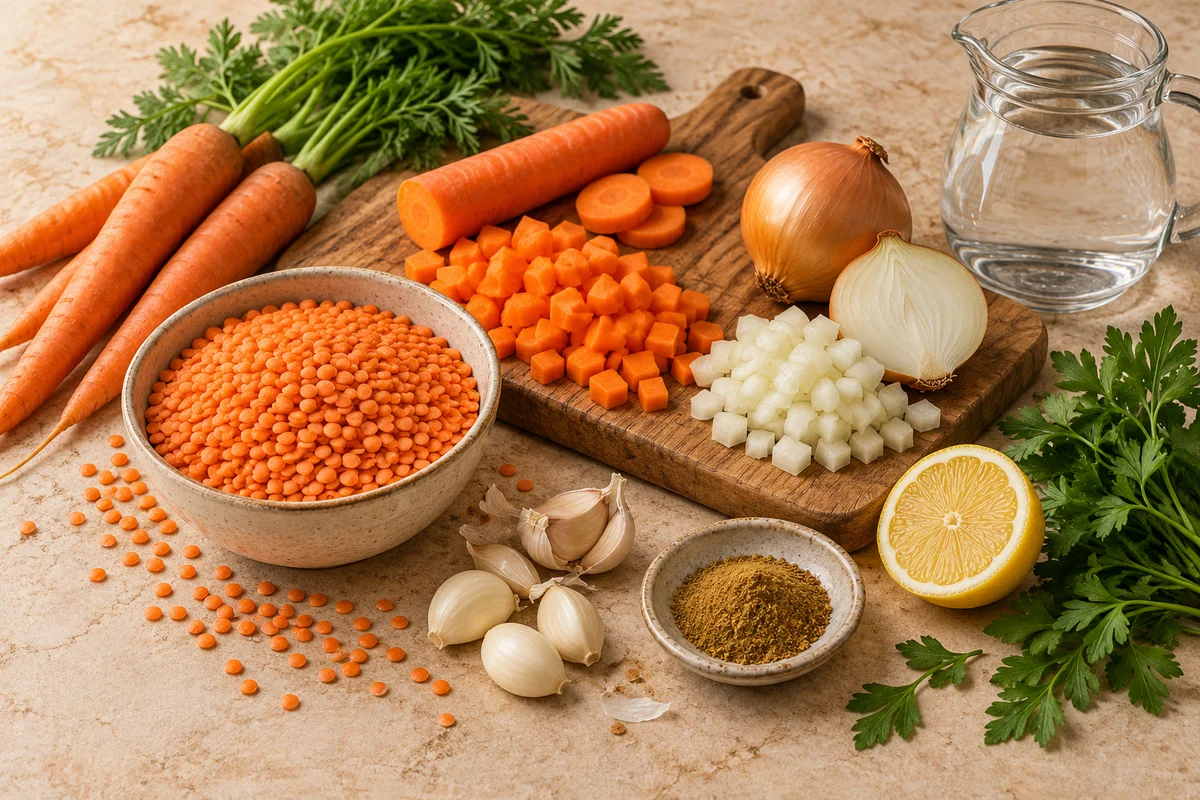
This guide explains the ingredient rather than presenting another version of our soup recipe. It covers shopping, preparation, liquid choices, seasoning, troubleshooting, and ways to use a cooked batch. All suggestions avoid pork and alcoholic cooking ingredients. Times are starting points, not promises: the lentils in your cupboard, the size of your pot, and the strength of your simmer matter. The illustrations show ingredients and possible textures; they are not photographs documenting a kitchen test.
What red lentils are and why the split matters
The orange lentils commonly sold as red lentils are often hulled and split. Check the package instead of assuming that every red-colored lentil is identical. A split lentil exposes its interior directly to water, while an intact lentil has a different structure. That distinction explains why a recipe intended for whole green lentils may behave very differently when you replace them with orange split lentils. Color alone is not a cooking instruction, and the words whole, split, peeled, and quick-cooking deserve attention when you shop.
Think about the role you need the lentils to play. For a thick soup, a soft filling, or a loose vegetable purée, breaking down is helpful. For a salad with separate, neatly defined pieces, choose a variety intended to hold its shape. Trying to rescue split lentils after they have dissolved is frustrating because there is no technique that reconstructs the individual halves. A better shopping decision usually solves that problem before the saucepan reaches the stove.
Choose a package for the meals you actually cook
Look for an intact bag or container, clear labeling, and lentils that appear dry rather than damp or clumped. A small package is sensible if this is an unfamiliar ingredient. It gives you a chance to learn its flavor and behavior without committing shelf space to a large quantity. If you already cook lentil soup regularly, a larger bag may be convenient, but compare the price per weight and your likely use rather than the headline package price alone.
Once home, keep the package information until the lentils are used. Cooking directions, allergen statements, and storage advice are more useful than a generic estimate copied onto a decorative jar. If you decant the lentils, label the container with the ingredient name and purchase date. Do not combine a newly opened bag with an unidentified older batch. Consistent batches make it easier to recognize whether a change in tenderness comes from the ingredient or from your method.
Sort and rinse before the pot gets hot
Spread the dry lentils onto a light-colored plate and look for anything that does not belong. Then rinse them in a fine-mesh strainer under running water. A colander with large holes can lose the smallest pieces, so check your equipment before tipping in the entire bag. Let excess water drain away. The aim is to remove surface dust and stray material, not to make every drop of rinse water perfectly transparent at the expense of time and water.
Do this preparation before heating oil for onion or spices. Rushing to rinse lentils while garlic is already browning makes it easier to scorch the aromatics. A useful sequence is to measure the lentils, rinse them, prepare the vegetables, and put your water or checked broth within reach. You can then cook with attention on the pan rather than searching for a strainer or opening a cupboard with wet hands.
Do red lentils need soaking?
Split red lentils generally do not need soaking before ordinary stovetop cooking. That makes them different from many dried beans that require more advance planning. Rinsing and soaking are separate operations: rinsing cleans the surface, while soaking leaves the ingredient submerged for an extended period. A recipe that says no soaking is required is not telling you to skip inspection and rinsing. Follow any specific preparation directions printed on your package.
If you have already soaked them, do not treat the usual cooking time as a fixed target. Drain them and check their texture early as they simmer. Avoid adding an unnecessary soaking stage simply because another pulse needs one. It can make meal planning more complicated without addressing the actual problem, which is often the wrong lentil variety or an overly vigorous simmer. For a quick weeknight meal, simple preparation is usually the more manageable starting point.
Match the amount of liquid to the finished dish
There is no single liquid ratio that produces every possible lentil dish. A soup intentionally retains cooking liquid; a thicker spoonable accompaniment needs less free liquid at serving time. Public cooking guidance commonly starts around three parts liquid to one part dry lentils, but the package and the intended dish should guide you. A wide uncovered pan loses water differently from a narrow covered saucepan, even when the measured ingredients are identical.
Measure rather than guessing during your first attempt with a particular bag. Keep additional hot water nearby and add small amounts when necessary. If you pour in a large jug whenever the mixture looks thick, it becomes difficult to distinguish absorption from evaporation. Make one adjustment, stir gently, and allow it to settle before deciding again. Write down the final amount if you want to repeat the texture with the same pot and ingredient.
Control the simmer and check texture early
Bring the liquid to the point specified by your method, then reduce the heat so the lentils cook gently. An aggressive boil can throw foam up the pan and make a thickening mixture catch at the base. Use a saucepan with enough spare capacity for bubbling and expansion. A tight fit may look efficient at the beginning but become awkward when you need to stir without splashing the stove.
Begin checking split red lentils early; some soften quickly, while a smooth soup takes longer than a barely tender spoonful. Remove a small sample safely, cool it, and assess the center rather than relying only on appearance. Add liquid if the mixture becomes dry before tenderness develops. Once it approaches the texture you want, stay nearby. The change from soft pieces to a cohesive purée can be welcome in soup and unwelcome in a dish intended to have more definition.
Use onion, carrot and garlic for different jobs
Onion provides a rounded savory base when softened before liquid is added. Carrot brings a different texture and a gentle sweetness; cut it small enough to become tender within the cooking plan. Lentils can soften while large carrot chunks remain firm, so uniform preparation matters. You do not need identical cubes, but a mixture of tiny fragments and thick wedges will not cook at the same pace in a short simmer.
Garlic is a supporting flavor rather than a reason to increase the heat. Add it where it can cook briefly without turning dark while you finish other preparation. If an aromatic smells burnt or looks blackened, adding water will not make that flavor disappear. Restarting a small base may save the whole meal. Keep the ingredient list modest on your first batch so you can notice what the onion, carrot, and lentils each contribute.
Build flavor with cumin and other dry spices
Cumin gives lentils a warm, earthy direction and works well alongside carrot. Start with a restrained amount, especially if your spice jar is fresh or you are unfamiliar with the combination. A spice should make the dish more interesting without obscuring the ingredient you are learning to cook. Ground coriander, a little paprika, or black pepper can offer other directions, but adding every available spice makes it harder to evaluate the result.
If you warm spices in oil, keep that stage brief and controlled. Dry spices can catch quickly in a hot, nearly empty pan. Have the next ingredient ready so you can move on promptly. For a milder approach, stir the spices into the cooking liquid and let them simmer with the lentils. Both approaches can fit everyday cooking; choose one that matches your equipment and attention rather than treating a more elaborate sequence as automatically better.
Choose water or broth deliberately
Water is a useful starting liquid because it lets you taste the lentils and seasonings clearly. Broth introduces its own flavor and salt, which can be helpful but can also dominate a small batch. Read the ingredients on any prepared broth or stock concentrate. For the dietary approach used here, select products without pork or alcoholic ingredients, and ask the manufacturer when the label does not resolve a concern important to you.
Do not assume that vegetable wording on the front of a package answers every dietary or allergen question. The full ingredient statement and preparation instructions matter. Concentrates also vary in dilution strength: a spoonful from one brand may not correspond to a spoonful from another. Mix according to the product directions, then adjust the finished lentils after tasting. If the broth is already assertive, keep other salty additions restrained until the end.
Finish with lemon, herbs or a measured topping
A little lemon juice added near serving can change the balance of a thick lentil dish without changing its basic texture. Add it gradually to a small taste first. You are looking for a brighter finish, not a sharp flavor that takes over every spoonful. Lemon zest offers a different effect from juice, so avoid treating them as interchangeable measures. Wash the fruit before zesting and keep the bitter white layer out of the shavings.
Fresh parsley or another suitable herb adds a contrasting finish. Chop only what you plan to use and keep any garnish separate when storing the main dish. A spoonful of plain yogurt may suit some bowls, but it introduces milk and changes the dietary profile. A drizzle of oil adds richness without making the mixture thinner in the same way water does. Choose one finishing element, taste, and decide whether the dish actually needs anything else.
Understand what substitutions will change
Whole brown or green lentils are not a direct timing substitute for split red lentils. They can bring a firmer bite and may require a different amount of cooking. If a dish depends on red lentils dissolving to thicken the liquid, a firmer variety changes the result even when it becomes tender. Use a recipe written for that variety rather than expecting a one-word swap to preserve the texture.
Canned lentils are already cooked and belong later in the preparation sequence. They will not absorb and soften exactly like dry split lentils simmered from the beginning. Chickpeas bring an even larger and more distinct bite, so they are a change of dish rather than a subtle replacement. For a flexible vegetable soup, these changes may be welcome, but name the ingredient accurately and adjust the method instead of promising the same outcome.
Fix lentils that are too thick or too thin
If the pot becomes too thick while the lentils are still firm, lower the heat and add hot water in small increments. Stir along the bottom to make sure nothing is sticking. If the lentils are tender but the consistency is heavier than you want, the same gradual dilution can restore a spoonable texture. Taste again after adjusting, because additional water also reduces the concentration of salt, spice, and acidity.
For a mixture that is too thin, first decide whether it is actually meant to be soup. If you want it thicker, simmer gently without the lid and stir regularly, or blend a portion if the texture of the dish permits. Avoid adding a handful of dry lentils at the last moment: the original batch may turn pasty while the new addition remains undercooked. It is easier to control the first liquid additions than to repair an uneven batch later.
Work with softness instead of fighting it
Very soft split red lentils are not automatically a failed meal. A smooth texture can be useful in soup, a vegetable sauce, or a soft accompaniment. What matters is whether it fits your intended serving style. If you wanted separate lentils for a salad, acknowledge that the ingredient choice was unsuitable rather than covering the mixture with toppings and expecting it to behave differently.
When the lentils have become smoother than planned, pair them with a contrasting component cooked separately. Roasted vegetables, toasted bread, or a crisp fresh garnish can bring variety to the bowl. Keep dietary and allergen checks attached to those additions. This approach creates a balanced meal from the texture you have, rather than continuing to cook a mixture that has already passed its useful stopping point.
Plan a batch without making every meal identical
A plain or lightly seasoned batch gives you more options than a heavily finished one. You can portion part for a soup base and keep another portion thicker for serving with vegetables. Finish individual portions with different herbs or lemon at serving time. This is ingredient preparation, not a requirement to eat the same complete meal repeatedly. Consider what you already have in the refrigerator before cooking a large amount.
Use containers sized for the portions you will actually need. A large frozen block is inconvenient if you only want one lunch. Label the contents clearly, including added broth or allergens, and record the preparation date. Keeping a note of the original seasoning prevents you from adding another full measure of cumin or salt when the batch becomes part of a later dish. Practical labeling often saves more effort than preparing extra garnishes in advance.
Cool, store and reheat with care
Transfer cooked lentils into shallow containers and refrigerate promptly rather than leaving a deep saucepan to stand on the counter. Use refrigerated leftovers within three to four days, or freeze portions. Follow the linked food-safety guidance for handling and reheating; smell alone cannot establish safety. Keep raw ingredients and utensils used for raw meat away from the cooked batch when preparing several dishes together.
Expect the texture to thicken during storage. When reheating a suitable portion, add a little water and stir so the center heats evenly rather than allowing the edges to dry out first. Keep fresh toppings separate until serving. Do not judge the amount of liquid needed from a cold, stiff portion before it begins to warm. A small adjustment after heating usually gives you more control than flooding the container at the start.
Turn ingredient knowledge into a complete dinner
Once you understand the behavior of split red lentils, use the linked red lentil, carrot, and cumin soup recipe for a complete ingredient list and cooking sequence. This guide supplies the decisions behind that recipe; it does not replace its measurements. Read the card before beginning, check the broth label, and prepare the vegetables to the stated size. That combination of ingredient understanding and a clear sequence is more useful than memorizing a single universal cooking time.
For a different meal, let the lentils support vegetables and a grain rather than expecting them to do every job in the bowl. A softer lentil component works well alongside a more separate grain or roasted vegetable. Choose the final meal around the texture, season in stages, and keep notes on the package you used. The next batch then becomes easier because you are repeating an observed method instead of starting with another guess.
Frequently asked questions
Do red lentils need soaking?
Split red lentils generally do not need soaking. Inspect and rinse them, then follow the package and the intended dish.
Why did my red lentils turn mushy?
Split lentils soften and break down readily. That is useful in soup, but whole varieties are a better choice when separate pieces are essential.
Can I use green lentils instead?
They have a different texture and cooking behavior. Use a method written for the replacement rather than keeping every timing and liquid amount unchanged.
Sources and further reading
These references support ingredient and handling guidance. They have not tested or endorsed recipes on this site.
Use complete recipes for measurements, and follow product and equipment instructions. Meal suggestions here avoid pork and alcoholic cooking ingredients; check packaged products and personal dietary requirements separately.