How to Cook Quinoa: Rinsing, Ratios, Fluffy Texture and Meal Ideas
Learn quinoa rinsing, water ratios, saucepan choices, resting, bowl ideas, salad preparation and practical fixes for wet or bitter results.
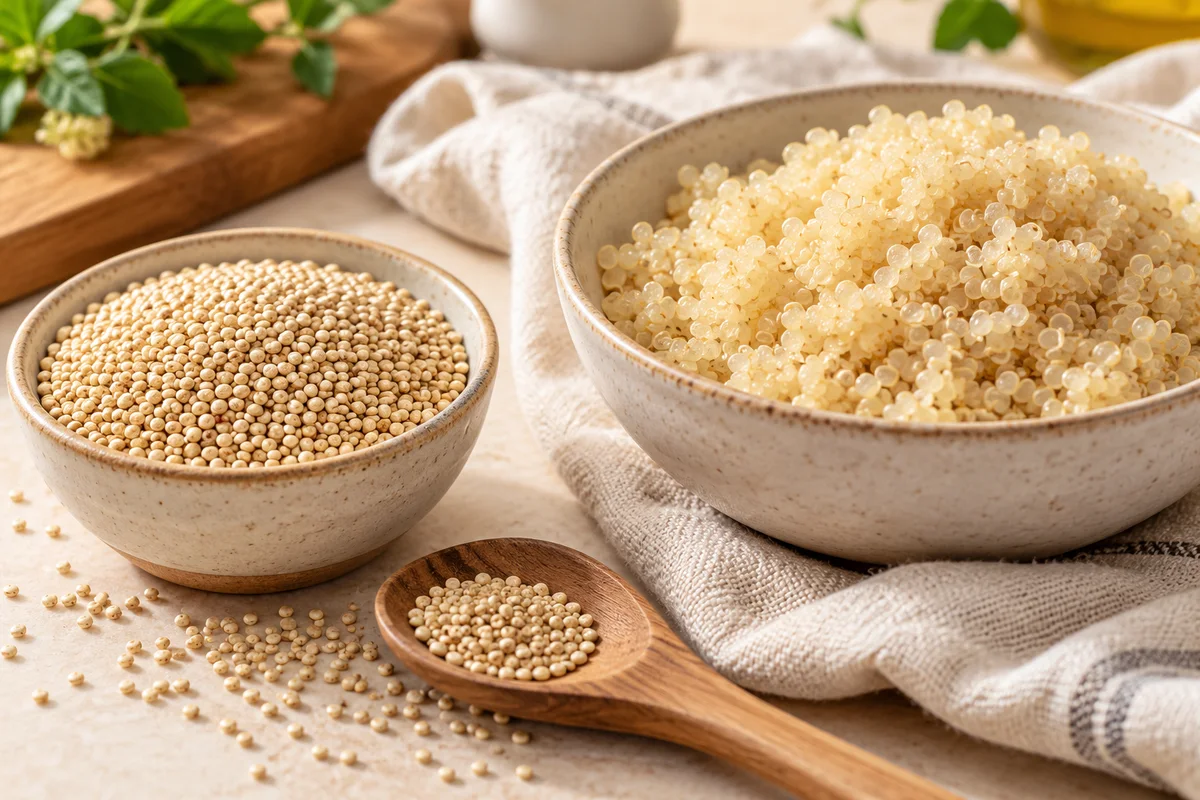
Quinoa is a useful base when you want small, separate grains that can sit under vegetables, absorb a little dressing, or join a warm bowl. It is also an ingredient that can feel disappointing when the result is wet, bitter, or packed into a dense layer. Those problems do not all have the same cause. Learning to identify the product, measure water, manage the simmer, and rest the cooked quinoa gives you a clearer path than adding another seasoning to a texture you do not enjoy.
This guide explains quinoa as an ingredient and connects it to complete recipes already on the site. It is not a promise that one liquid ratio works in every pot. Follow the package, observe your equipment, and use texture as the final check. The meal suggestions avoid pork and alcoholic cooking ingredients. Images are 3D illustrations, and the guidance does not claim personal kitchen testing, laboratory nutrition analysis, or suitability for every dietary need.
Know what you are buying
Quinoa is commonly used like a grain in bowls and salads, although it is a seed rather than a cereal grain in the botanical sense. For cooking, the practical issue is the product in the bag. Plain dry quinoa, a seasoned quick-cooking packet, and a ready-to-heat pouch do not need the same amount of water or the same cooking sequence. Identify the format before you begin measuring anything into a saucepan.
Check whether the package contains only quinoa or a blend with rice, other grains, or seasonings. A blend may be convenient, but the instructions belong to that product rather than to plain quinoa generally. If a recipe specifies dry quinoa, do not substitute the same volume of a cooked pouch without reconsidering the serving amount and liquid. Preparation state matters more to the method than a similar-looking photograph on the packaging.
Choose a color for texture and the dish
White, red, black, and mixed quinoa are widely available, with differences in appearance and bite. Begin with the type specified by the recipe if you want to assess that recipe fairly. Changing to a mixed product can alter both the visual result and the point at which the batch feels tender. A salad may welcome a more distinct bite, while a bowl with a delicate sauce may suit a softer base.
You do not need to buy several varieties to learn the ingredient. One clearly labeled bag lets you compare how the same product behaves with a slight change in liquid or resting time. Once you have a result you like, try another color while keeping the pot and method consistent. That gives you a useful comparison instead of an uncertain result caused by several changes at once.
Rinse with the right strainer
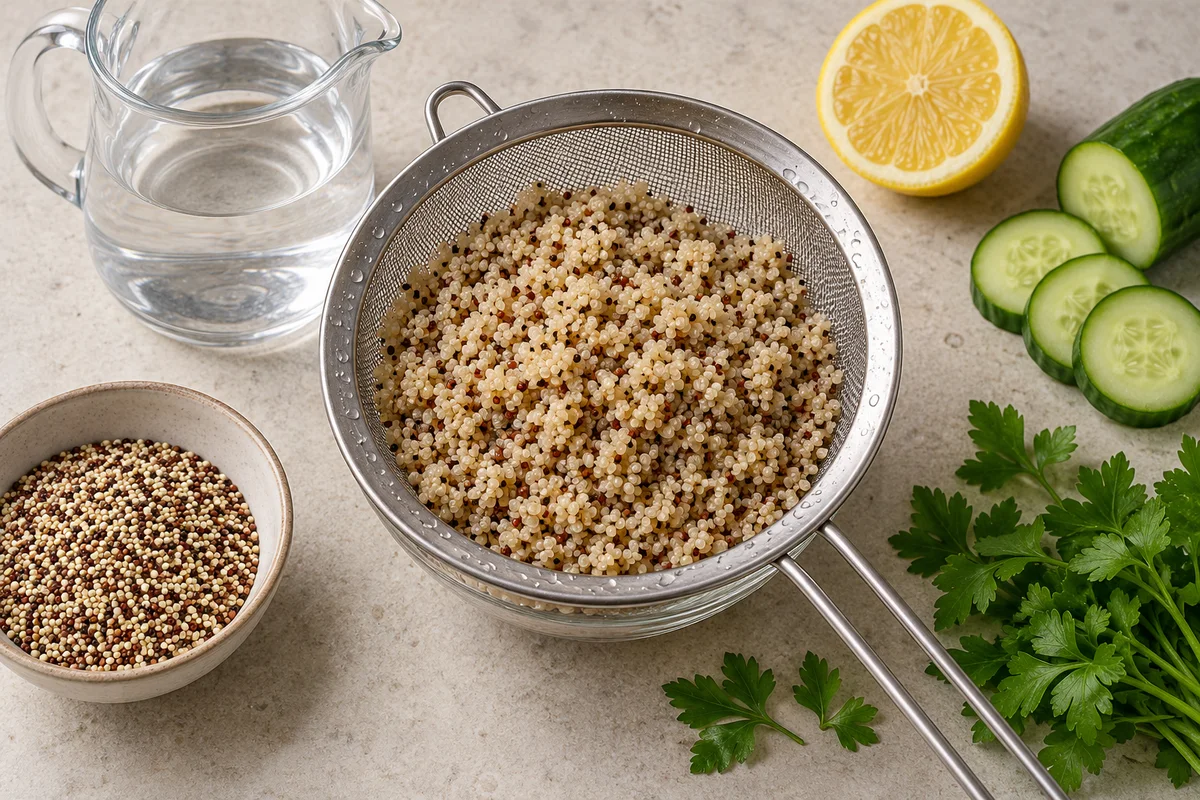
Quinoa is small enough to slip through equipment that works well for pasta. Check that your sieve has a fine mesh before pouring in a full measure. Rinsing is commonly recommended to remove surface saponins associated with bitterness, although some products are already processed or labeled pre-rinsed. Follow the package and rinse thoroughly when directed. Let excess water drain before moving to the pan so your measured liquid remains more predictable.
A bowl underneath the sieve can help you see what you are doing without losing seeds down the sink. Keep the work area tidy and avoid leaving wet quinoa sitting while you search for the lid or measure broth. Prepare the pot and liquid first, then rinse. The purpose is a straightforward preparation step, not a long ritual that makes an everyday ingredient feel more difficult than it needs to be.
Measure quinoa and liquid using consistent units
Use a dry measuring cup or a scale for the quinoa, and a suitable liquid measure for the water. A heaped mug, a partly filled jar, and a standard cup are not interchangeable measurements. If you want to repeat a result, record the actual amount rather than the size of the container you happened to use. Package instructions are a useful first reference because products and processing can differ.
A common starting approach uses about two parts water to one part dry quinoa by volume, but this is not a universal guarantee of your preferred texture. Pot width, lid fit, heat, and rinsing affect what happens. If the first batch is wet, diagnose the method before dramatically reducing water. If it is dry while the seeds remain firm, add a little hot water and continue gently rather than assuming the clock has settled the question.
Pick a saucepan that suits the amount
A modest batch does not need an enormous stockpot, and a large batch should not be packed into a tiny pan. Choose enough room for liquid to bubble without spilling and a lid that fits properly. A very broad pan may lose liquid differently from a narrow one. The same written ratio can therefore behave differently across your cookware, especially when the lid is frequently removed during cooking.
Use the same pot for your first few attempts if possible. This makes it easier to learn what your burner setting and lid do. Note whether the liquid disappears before tenderness develops or remains after the seeds are done. Those observations point toward specific changes. Buying another ingredient or adding a complicated topping will not explain a cooking difference caused by changing the pan every time.
Bring to a simmer, then reduce the heat
Follow the sequence on the package or a complete recipe for combining water and quinoa. Once the mixture reaches the required boil, reduce the heat for gentle cooking and cover as directed. The aim is not to keep the lid rattling over an aggressive boil. Excessive heat can remove water too quickly and leave a dry bottom layer while the rest of the batch still needs time.
Avoid lifting the lid repeatedly just because little seems to be happening. Check when your method indicates, and use a brief, careful look rather than leaving the pot open while you finish another task. If you smell scorching or see the liquid disappearing unexpectedly early, lower the heat and assess the batch. Cooking instructions assume an appropriate simmer, not an identical numbered setting on every stove.
Learn the visual and texture cues
Cooked quinoa often shows a small pale ring or tail-like germ around the seed, but appearance alone does not tell you whether the batch suits your meal. Taste a cooled sample. It should not have an unpleasant hard center, and the surrounding liquid should fit the method you are using. A salad base and a softer bowl component may have slightly different ideal stopping points.
If the seeds remain firm after the measured liquid is gone, add a small amount of hot water and continue gently. If they are tender but sitting in extra water, consider whether the lid, pot, or original measurement explains the excess. Drain if the method and equipment allow, then assess the texture after resting. Make a note for next time rather than treating the entire batch as a mystery.
Rest before fluffing and serving
A resting stage gives the cooked batch a chance to settle before you move it around. Follow the package or recipe for the covered rest rather than immediately scraping every seed from the bottom of the pot. When you do fluff, use a fork or another suitable utensil gently. The aim is to loosen the quinoa, not to stir it vigorously until it becomes compressed and wet-looking.
Serve some immediately if you are making a warm bowl, and handle any remaining portion promptly for storage. Resting for cooking quality does not mean leaving a large pot on the counter for hours. If the finished quinoa is already wetter than you prefer, heavy stirring will not create separate grains. Recognize the texture you have, choose a suitable use, and make one measured adjustment to the next batch.
Decide whether to toast before adding liquid
Some methods toast quinoa briefly before simmering to create a different flavor direction. This is optional, not a requirement for every meal. If you follow such a method, account for any rinsing and draining it specifies and watch the pan carefully. A small ingredient can move from lightly aromatic to scorched while you are opening a broth carton or chopping garlic.
Do not add a toasting stage to an unfamiliar recipe and then assume any change in water needs is unrelated. Each additional step creates another variable. For your first batch, a plain method is often the clearest way to learn the product. Once that works, compare a toasted version with the same quinoa and cookware. Decide whether the flavor difference matters in the actual bowl, not only when tasting the grain alone.
Use broth carefully and season in stages
Water creates a neutral base that can support several different meals. Broth contributes flavor and salt, so it is useful when that direction fits the dish. Read the ingredients and choose a product without pork or alcoholic cooking ingredients for the approach used here. Follow concentrate dilution directions; a spoonful is not a standard strength across all brands. Keep an unseasoned option in mind if the quinoa will later meet an assertive dressing.
Salt, citrus, herbs, and oil do different jobs. Taste the cooked base with a little of the planned topping before increasing the seasoning. A plain spoonful may seem quiet because it is meant to sit under flavorful chicken, vegetables, or sauce. If you season every component as though it will be eaten alone, the assembled bowl can become overwhelming. Build the balance across the meal rather than in every part independently.
Build a warm bowl with separate components
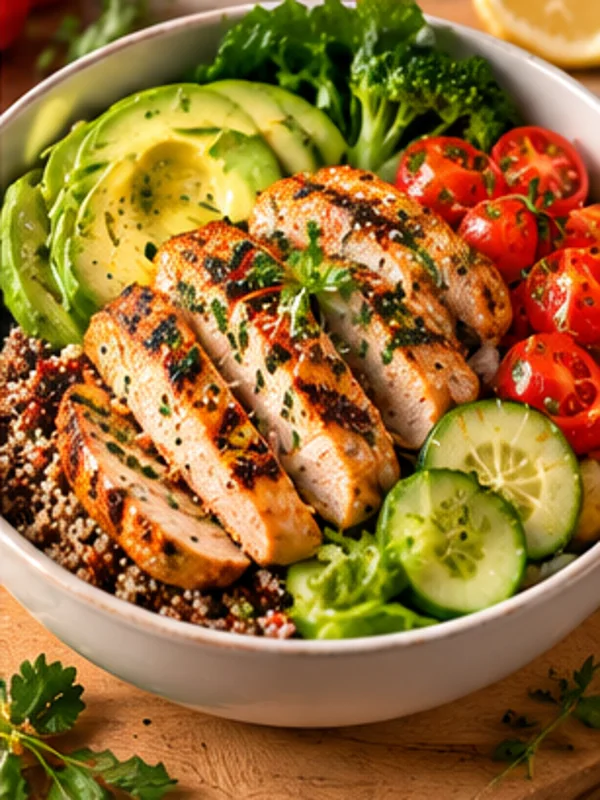
Quinoa works well as the base of a bowl when the other components bring distinct textures. Consider a protein, cooked vegetables, something fresh, and a measured finishing element. Not every bowl needs all four, but the idea helps prevent a collection of similarly soft ingredients. Prepare the component that takes longest first, and leave delicate additions until closer to serving so the finished meal feels intentional.
The site's lemon chicken quinoa bowls provide a complete example with ingredient measurements and a cooking sequence. Use that recipe when you want a planned dinner rather than trying to reconstruct it from general suggestions. This guide explains the quinoa decisions behind the bowl. If you change the protein or vegetables, keep their cooking requirements separate and do not assume that a cooked grain establishes the safety or doneness of everything served above it.
Make a salad without soaking the quinoa in dressing
For a cold salad, think about moisture from every source: cooked quinoa, chopped tomatoes, cucumbers, and dressing can all contribute liquid. A large amount added early may make the mixture wetter than you expected. Begin with a measured dressing and add more after combining a small portion. Taste the assembled salad at its intended serving temperature rather than deciding from a warm spoonful of quinoa alone.
Prepare and cool cooked ingredients safely, and keep delicate herbs or crisp additions separate when practical. If the salad is for later, consider what will release water during storage. A modest amount of dressing before serving can be more controllable than a fully dressed batch waiting in the refrigerator. The right approach depends on the recipe, but the decision should account for the entire mixture instead of blaming the quinoa for moisture supplied by the vegetables.
Understand substitutions before changing the base
Rice, couscous, bulgur, and small pasta can fill a similar place on a plate, but they do not share quinoa's cooking instructions. A substitution may be straightforward at serving time when both ingredients are already cooked. It is less straightforward when a one-pot recipe depends on a particular amount of absorption. Identify whether the grain is a separate component or part of the cooking system before making a swap.
For allergy or gluten-related needs, check the actual product and preparation environment rather than assuming that every alternative is equivalent. Couscous and ordinary orzo are typically wheat-based, while blends can introduce additional ingredients. Describe the replacement accurately when serving others. A similar shape or role in a bowl does not mean the same ingredient composition, texture, or suitability for a person's dietary requirements.
Diagnose bitterness, wetness and a dense finish
If quinoa tastes bitter, review the product and rinsing instructions first. Also taste it without the sauce: a bitter dressing, scorched garlic, or burnt spices may be the source. Changing the quinoa water ratio will not correct a flavor introduced elsewhere. Keep the first few attempts simple enough that you can identify the component responsible. An accurate diagnosis saves repeated changes that make the method less predictable.
For wet quinoa, consider excess liquid, a low evaporation rate, or insufficient resting. For dry but firm quinoa, consider too little liquid, excessive heat, or a poorly fitting lid. A dense texture can come from handling as well as cooking. Record which problem occurred rather than describing every unsatisfactory batch as mushy. Specific observations point toward a useful adjustment and make future online advice easier to evaluate.
Plan batch cooking around actual meals
Before cooking extra, decide whether it will become warm bowls, salads, or a side. A neutral batch is more flexible than one already mixed with a strong sauce and delicate vegetables. Portion according to your household's meals rather than a generic serving size that leaves awkward leftovers. Label the container with the ingredient, cooking date, and any broth or seasoning that affects the dietary description.
Keep a note of the dry amount and the number of portions you actually served. That is a practical way to learn your preferred batch size without treating a generic yield estimate as exact. If you freeze quinoa, use suitable portions and containers and follow safe cooling guidance. A freezer full of unmarked grain is less useful than a few clearly identified portions that correspond to dinners you already know how to assemble.
Store and reheat without drying the edges
Cool cooked quinoa promptly in shallow containers and refrigerate it. Use the linked food-safety guidance for timing and reheating, and follow instructions for any mixed dish containing other perishable ingredients. A large covered pot left at room temperature is not a storage plan. Keep serving utensils clean, label portions, and avoid repeatedly warming the entire batch when you only need one serving.
When reheating, a small amount of water and a suitable cover can help prevent the outside from drying before the center is hot. Stir or redistribute as appropriate for the appliance and check even heating. Add fresh herbs and citrus after the main portion is ready. Do not assume a cold, compact portion needs a large amount of water before warming; adjust gradually so you preserve the separate texture you worked to create.
Choose flavor combinations with a clear direction
Lemon and parsley create a different bowl from cumin and roasted carrot, even when the quinoa method is unchanged. Pick one direction and let the supporting ingredients reinforce it. A mild grain base does not require a complex dressing to be interesting. Contrasts in temperature, texture, and freshness can matter as much as the number of seasonings. Start with what the main ingredients need rather than a long list of possible additions.
If sharing the meal, keep optional toppings separate so people can choose their preferred balance and identify ingredients. Cheese introduces milk, nuts introduce their own considerations, and prepared sauces may contain ingredients not obvious from their names. Good meal planning includes clear descriptions as well as flavor. A bowl is flexible because its components can be chosen deliberately, not because every possible addition is automatically compatible.
Make a repeatable quinoa routine
Use one bag, one saucepan, a measured amount of liquid, and a clear rest for your next attempt. Write down the texture you liked and how you served it. That small record is more useful than collecting several contradictory ratios without noting their methods. The next time you cook, you can decide whether to repeat the result or make a specific change for a salad, a warm bowl, or another use.
Once the base feels familiar, vary the accompaniments while keeping the cooking routine steady. This turns quinoa into an ingredient you can plan around rather than a packet that needs a fresh search every evening. Keep the preparation simple, the measurements consistent, and the finished meal balanced across its components. Confidence comes from understanding what happened in your own pot and using that observation on the next batch.
Frequently asked questions
Why rinse quinoa?
Rinsing is commonly recommended to remove surface saponins associated with bitterness. Check whether your product is pre-rinsed and follow its directions.
Is one water ratio right for every quinoa product?
No. Product type, pot, lid and method matter. Start with package instructions and make measured adjustments.
Can I replace quinoa with couscous?
Their preparation and ingredients differ. Cooking the substitute separately is often easier than changing a liquid-balanced one-pot method.
Sources and further reading
These references support ingredient and handling guidance. They have not tested or endorsed recipes on this site.
Use complete recipes for measurements, and follow product and equipment instructions. Meal suggestions here avoid pork and alcoholic cooking ingredients; check packaged products and personal dietary requirements separately.