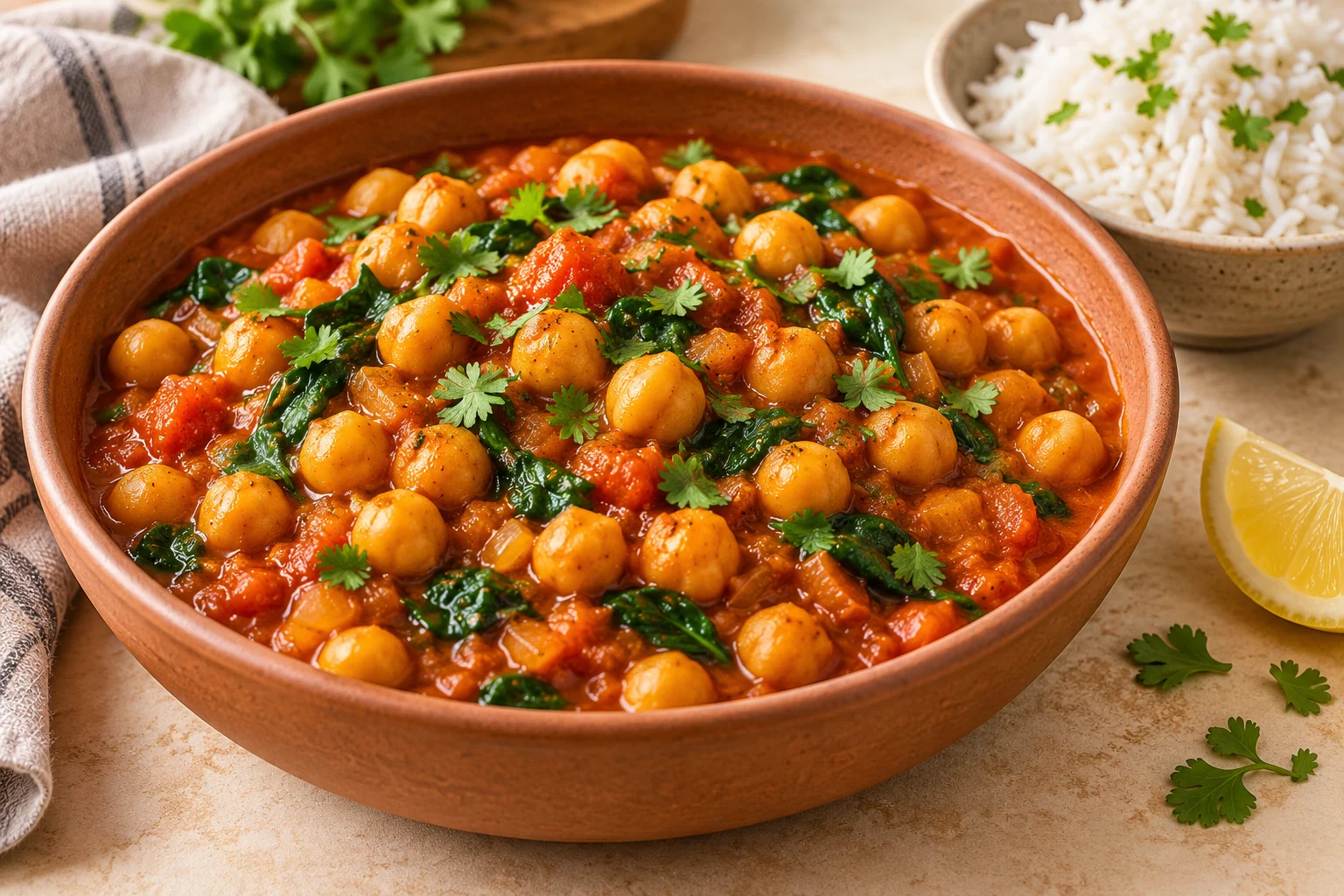
Chickpea curry without coconut milk can be rich, comforting, and easy to make with ordinary pantry ingredients. Instead of replacing coconut milk with another carton or cream, this version builds its sauce from onion, tomatoes, vegetable broth, and a small portion of mashed chickpeas. The result is a savory tomato-based curry with no coconut flavor and no dairy needed in the base recipe.
This guide explains the ingredient choices, the cooking sequence, and the adjustments that matter when your sauce is too thin, too sharp, or thicker than you expected. You will also find a complete printable recipe below. The method is an original weeknight formulation, not a claim of a traditional regional preparation or an independently kitchen-tested result. Times are estimates and depend on your ingredients and equipment.
What to use instead of coconut milk
You do not need a one-for-one liquid replacement when making a tomato-based chickpea curry. Coconut milk normally contributes liquid, fat, and body. Here, olive oil softens the onion and carries the spices, tomatoes provide the sauce, and mashed chickpeas add thickness. A modest quantity of broth keeps the mixture loose enough to simmer without making it soupy.
This approach is useful when you dislike coconut flavor, do not have a can available, or simply want a different style of sauce. It is not designed to imitate coconut cream exactly. Expect a more tomato-forward dish with a lighter mouthfeel. If avoiding coconut for an allergy, check every packaged ingredient and follow the precautions appropriate to your own needs; a recipe title alone cannot establish allergen safety.
Gather a manageable set of ingredients
For four servings, start with two standard 15-ounce cans of cooked chickpeas, drained and rinsed, giving approximately three cups or 480 grams of drained beans. Use one medium onion, three garlic cloves, a tablespoon of grated fresh ginger, a 14-ounce can of crushed tomatoes, and half a cup of vegetable broth. Keep additional water nearby for adjustments rather than pouring it all in at the start.
The seasoning uses two teaspoons of mild curry powder, one teaspoon of ground cumin, and half a teaspoon of garam masala added near the end. Two tablespoons of olive oil are enough for the onion and spices in a suitable pan. Finish with about three ounces of baby spinach and a little lemon juice. Salt depends on your canned ingredients and broth, so begin modestly and taste before adding more.
Choose cooked chickpeas for a practical dinner
Canned chickpeas make this recipe straightforward because they are already cooked. Drain them into a colander and rinse them before adding them to the sauce. Brands vary in firmness, so taste one first. Very firm beans may need a little longer simmering and an extra splash of water before they become as tender as you prefer.
Dry chickpeas are also possible, but they must be fully cooked separately before you start this quick recipe. Do not add a handful of uncooked dry beans and expect them to soften during the short sauce simmer. If you enjoy batch cooking, prepare a larger pot of chickpeas using an appropriate method, then portion the cooked beans for several meals. Our ingredient guide explains more ways to work with chickpeas.
Build flavor before adding the tomatoes
Use a wide saucepan or deep skillet with room for stirring. Warm the olive oil over medium heat, then add the finely chopped onion with a small pinch of salt. Cook until softened, stirring regularly. Aim for a gentle sizzle rather than aggressive browning. An onion cut into smaller, even pieces will soften more predictably than a mixture of tiny fragments and large chunks.
Add the garlic and ginger once the onion has softened. Stir for about a minute, then add the curry powder and cumin for a brief stir. Spices can scorch quickly in a hot, dry patch of pan. Have the tomatoes ready before adding them, and reduce the heat if the mixture begins sticking. A little preparation makes this stage calmer and helps prevent a bitter base.
Simmer the sauce gently
Stir in the crushed tomatoes and half a cup of broth, scraping up the softened onion mixture. Add the cooked chickpeas and bring everything to a gentle simmer. Cook uncovered, stirring occasionally, until the flavors come together and the sauce begins clinging to the beans. A steady simmer is more useful than a fierce boil that splashes and evaporates liquid too quickly.
The printable recipe allows roughly twelve to fifteen minutes for this simmer, with adjustments as needed. Different tomatoes contain different amounts of water, and a broad skillet loses liquid faster than a narrow saucepan. Watch the texture rather than treating the timer as the only signal. If the pan becomes dry while the beans still need time, add water a tablespoon or two at a time.
Make the curry creamy without cream
Scoop out about half a cup of chickpeas with a little sauce and mash them thoroughly with a fork. Return that mixture to the pan and stir. The mashed beans thicken the liquid and create a more cohesive sauce without requiring coconut milk, dairy cream, or a separate flour slurry. Leave most chickpeas whole so the finished dish still has an appealing mixture of textures.
If you prefer a smoother sauce, mash a slightly larger portion, but make changes gradually. It is easier to thicken a loose curry than to undo an excessively dense one. A blender is not required for this method. If you choose to blend hot ingredients anyway, follow your appliance instructions carefully; never seal steaming liquid in equipment that is not designed to handle it.
Add spinach and finish the seasoning
Stir the baby spinach into the simmering curry in a few additions. Let each handful wilt before adding the next so it is easier to distribute. Once the leaves are tender, add the garam masala and start with one teaspoon of lemon juice. Taste a spoonful after it has cooled slightly, then adjust salt or acidity in small increments.
Frozen spinach can work if thawed and squeezed to remove excess water. Its texture will differ from fresh leaves, and adding it straight from the freezer can dilute the sauce. Other greens need different handling: tougher kale benefits from longer cooking and smaller pieces. Keep the basic method consistent, and change one ingredient at a time when learning what your household prefers.
Fix a thin, thick, or overly sharp sauce
If your curry is too thin, simmer it uncovered a little longer, stirring so the bottom does not catch. You can also mash a few more chickpeas. Avoid adding a large amount of thickener immediately. The sauce continues to settle slightly as it stands, and a small adjustment often provides enough body. Recheck the texture before deciding it needs another change.
If the sauce is too thick, stir in a small splash of water or broth. If it tastes sharply acidic, allow a little more gentle cooking and check the salt before adding lemon. Tomatoes differ, so the finishing juice is optional. Extra broth can soften an intense sauce, while serving with rice provides balance. Do not keep adding spices to solve a problem caused by acidity or excess concentration.
Adapt the heat without changing the whole dish
Mild curry powder keeps the base approachable, but spice blends vary significantly between brands. Smell and taste a familiar blend before deciding how much heat your table wants. If some people prefer a hotter dinner, offer chili flakes at the table rather than making the entire pan too spicy. This makes one meal easier to share without cooking separate sauces.
For children or anyone sensitive to heat, start with a mild blend and leave out optional chili completely. Garam masala contributes aroma and is not a direct substitute for every curry powder. Avoid assuming that doubling all the spices will automatically improve flavor. Build a balanced sauce first, then make a small finishing adjustment after tasting it with the rice or bread you plan to serve.
Plan the sides around the real cooking time
Serve the curry with basmati rice, brown rice that is already cooked, flatbread, or another side you enjoy. The curry itself is estimated at about thirty-five minutes including preparation, but a separate grain can extend the meal's total time. Start uncooked rice according to its package instructions before working on the sauce if you want both components ready together.
A cucumber salad with lemon and herbs gives a cool contrast without adding another hot pan. If you want a dairy topping, plain yogurt can be served separately, but the base curry does not require it. A dairy-free meal also needs suitable bread, sides, and garnishes. Check those items rather than assuming that a dairy-free main automatically makes the entire table dairy-free.
Use substitutions that keep the method reliable
Crushed tomatoes provide a relatively cohesive sauce. Diced tomatoes are chunkier and may need additional cooking or gentle crushing with a spoon. Tomato paste is more concentrated and cannot replace a whole can of tomatoes in the same quantity. If that is all you have, choose a recipe formulated for paste rather than guessing at a large substitution during a rushed dinner.
White beans can replace some chickpeas, although they soften and break down differently. Add delicate canned beans gently and avoid vigorous stirring. Sweet potatoes or raw carrots need enough cooking time to become tender; they are not direct last-minute additions. For the first attempt, use the listed ingredients, then adapt with an understanding of which components need longer heat and which can simply warm through.
Store leftovers with a clear plan
Transfer leftovers promptly into shallow containers and refrigerate within two hours, or within one hour when the surrounding temperature is above 90°F or 32°C. Keep the refrigerator at 40°F or 4°C or colder. Do not leave a full pan on the counter for hours while waiting for it to become completely cold. Smaller portions cool more effectively and are easier to reheat later.
For a simple conservative routine, use refrigerated curry within three days and reheat the portion you need to 165°F or 74°C. Stir during reheating and add a splash of water if the sauce has thickened. Store rice separately and cool it promptly too. Freeze suitable portions if you will not use them in time, label the containers, and thaw safely in the refrigerator before reheating.
Handling guidance: USDA and FoodSafety.gov references below.
Scale thoughtfully for a smaller household
For two servings, halve the ingredients and use a smaller pan so the sauce does not evaporate too quickly. A leftover half-can of tomatoes can go into another suitable meal or be stored safely in a covered container. Alternatively, make the full batch and portion the extra servings promptly. Choose the option that fits your schedule rather than keeping a large pan waiting through several meals.
When doubling the recipe, use a larger pan and allow additional time for the onion to soften and the sauce to reach a simmer. The cooking time does not necessarily double, but the liquid can behave differently in a crowded pot. Taste the final sauce before increasing salt or lemon. Multiply the starting ingredients, then use the same texture cues to decide when the curry is ready.
Turn one pantry meal into a repeatable routine
Keep chickpeas, tomatoes, broth, onion, and a spice blend you enjoy on a short pantry list. These ingredients can also support other dinners, which makes them more useful than a long shopping list for a single dish. On a busy day, measuring spices and draining the beans before heating the pan can make the cooking sequence easier to follow.
After serving, note one adjustment that would improve the next batch: perhaps less lemon, a longer simmer, or a milder spice blend. Record the actual change rather than rewriting the recipe from memory. Chickpea curry without coconut milk becomes a dependable option when you understand how the sauce thickens, how the flavors balance, and when to stop adjusting. Use the printable card below for the quantities and sequence.
Helpful tips before you cook
- Drain and rinse cooked chickpeas before starting.
- Mash a portion of the beans to thicken the sauce without cream.
- Choose mild curry powder first and offer extra chili separately.
- Check the sauce texture before adding more liquid.
Featured recipe
Follow the complete recipe below, check off ingredients as you go, or print a kitchen-friendly copy.